


Calcareous Grassland – Indicators of Traditional Grazing
Native orchids of Thuringia serve as prime examples of the close link between biodiversity and historically developed cultural landscapes, such as calcareous grasslands. Through selected species, ecological interrelationships, evolutionary adaptations, and highly specialized relationships between plants, insects, and habitats are illustrated. The publication demonstrates why orchids are considered sensitive indicator species and why their protection is inextricably linked to the preservation of species-rich landscapes.
Sebastian Brandt

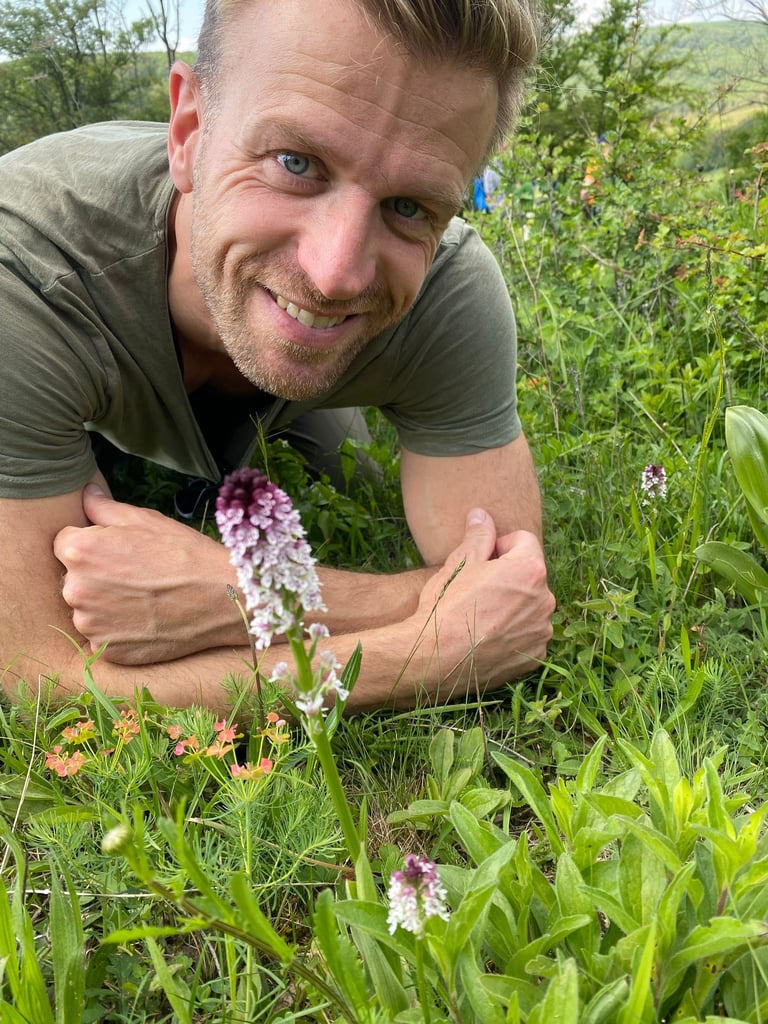
The Family of Dwarfs – The Three-Toothed Orchid
The Sophisticated Deceivers – The Bee Orchids
Insects: A Flirtation of the "Third Kind" – The Fly Orchid
Which Herb is a "Boy" Here? – The True Orchids
Hybridization – When Different Species Mate
The Lizard Orchid – A Winner of Climate Change
Fragrances in the Night – The Butterfly Orchid
The Return of the Pharaoh – The Pyramidal Orchid
Gone with the Wind – Tiny Seeds Made for Flight
Orchids in Thuringia, Germany
Calcareous Grassland – Indicators of Traditional Grazing
With around 20,000 species worldwide, orchids are the second largest plant family on Earth. Their extraordinary beauty has fascinated humans for centuries. Furthermore, their biology is so unique that this group of plants unites some of the most fascinating feats of evolution.
Many orchids are also highly sensitive indicator species for intact habitats with high biodiversity. With 47 of formerly 52 native species still present today, Thuringia is considered one of the most significant orchid regions in Germany.
Calcareous Grasslands – Indicators of Traditional Grazing
Calcareous grasslands mostly emerged on sites unsuitable for arable farming. Traditionally, they were grazed by sheep and goats. They are typical components of the historical cultural landscape. In Thuringia, they are primarily found in the Muschelkalk and Zechstein regions, such as the middle Saale Valley around Jena, the Orla Depression, the Kyffhäuser, the Hainleite, the middle Werra Valley, and the Rhön.
Calcareous grasslands are among the most species- and flower-rich types of grassland in Germany. In Thuringia, they are particularly diverse, as they are characterized by plants common to the eastern steppes (= subcontinental) as well as species widespread in the northern Mediterranean region (= sub-Mediterranean). Orchids belong to the latter group.
Calcareous grasslands are currently severely threatened by the sharp decline in sheep populations over the past 30 years and the associated abandonment of land use followed by scrub encroachment.
Crucial to this is the structurally diverse landscape, which is the result of centuries of traditional land use. However, this historically grown cultural landscape is under significant pressure today and requires targeted management and conservation measures.
The focus is on native orchids from Thuringia, Germany—not exotic treasures, but sensitive witnesses of their habitats. Their forms, scents, and ways of life tell stories of sophisticated insect flirtations, evolutionary experiments, natural hybridization, and an astonishing resilience in the face of change and loss.
This chapter opens the series "Orchids in Thuringia." It leads through a landscape full of silent strategists, clever deceptions, and remarkable adaptations. It tells of nutrient-poor soils and rich biodiversity, of centuries of grazing tradition and highly specialized plants that have found their home right here.
The following publication invites you to take a closer look: at calcareous grasslands as a cultural landscape, at blossoms as tricksters, and at seeds as travelers on the wind. Those who engage with it will discover just how much natural history, presence, and future is hidden within these seemingly inconspicuous plants.
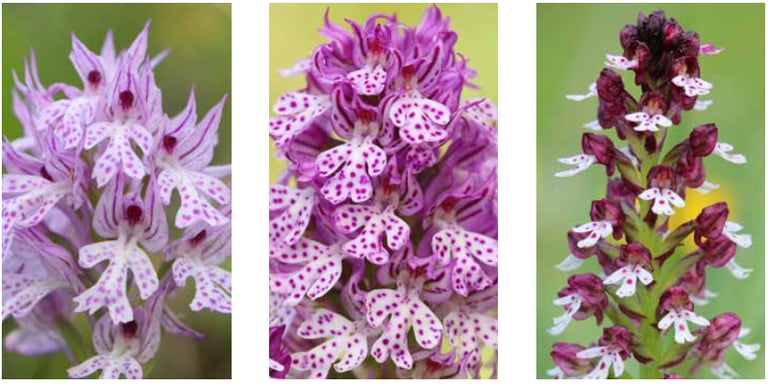
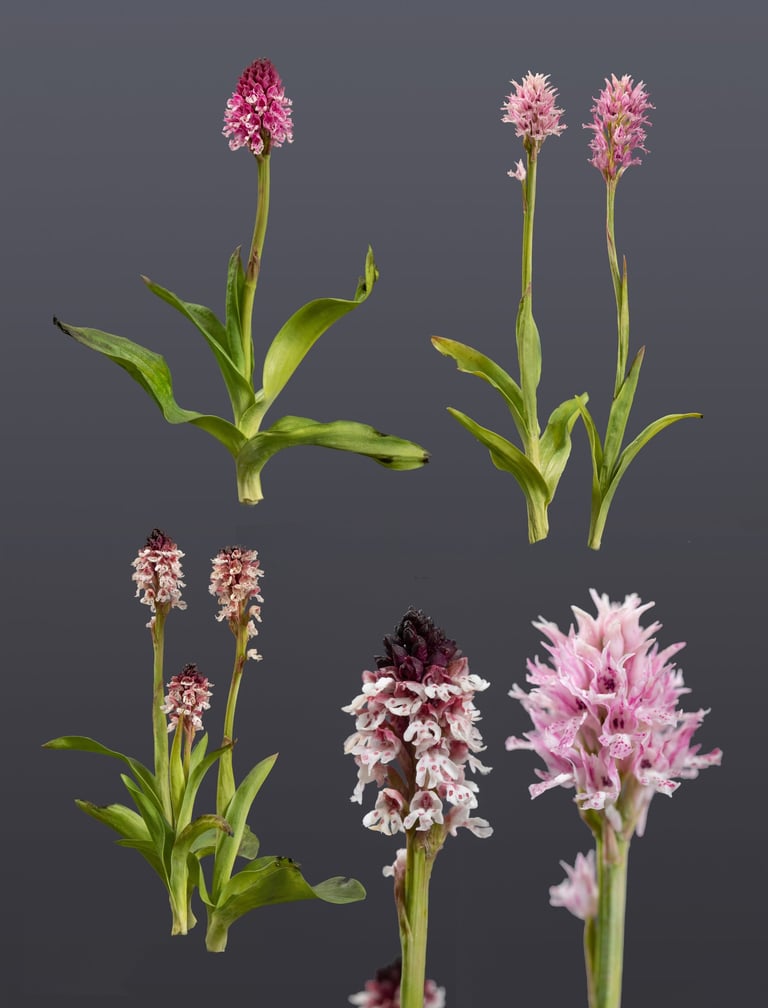
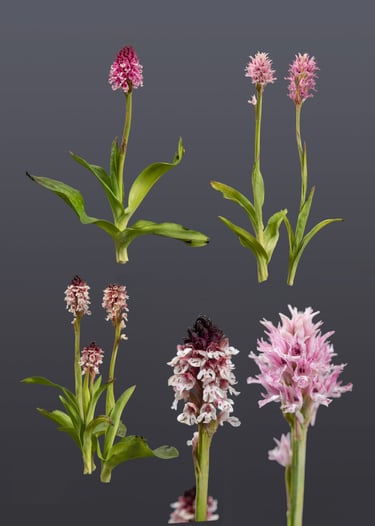
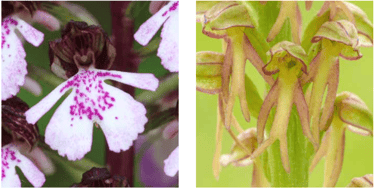
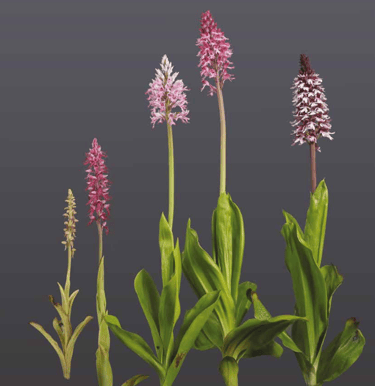
Center: Dietrich's orchid – left and right "the parents": Three-toothed orchid and burnt orchid with their spotted labella
Die Familie der Zwerge – das Dreizähnige Knabenkraut
The three-toothed orchid (Neotinea tridentata), the closely related burnt orchid (Neotinea ustulata), and their colorful hybrid, Dietrich’s orchid (Neotinea × dietrichiana), are now among the most severely threatened orchids in Germany. These small-statured species are restricted to exposed, short-grass dry grasslands on calcareous soils.
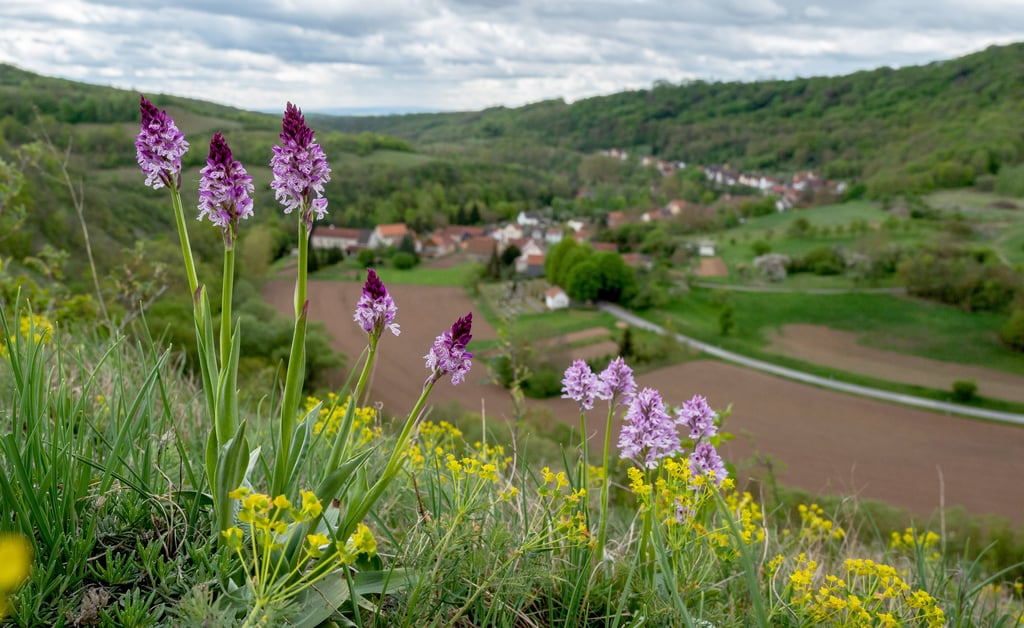
The Thuringian populations in the southwestern Zechstein regions, the Saale Valley, and especially at the Wipper Water Gap near Günserode are among the most significant occurrences of these orchids in Germany. Their colorful flowers are quite small.
The three-toothed orchid features a floral hood ending in three pointed teeth. With its blackish-brown buds, the burnt orchid appears as if singed or scorched. With their dense yet delicate-looking inflorescences, they belong to the genus Neotinea, which is otherwise only widespread in the Mediterranean region.
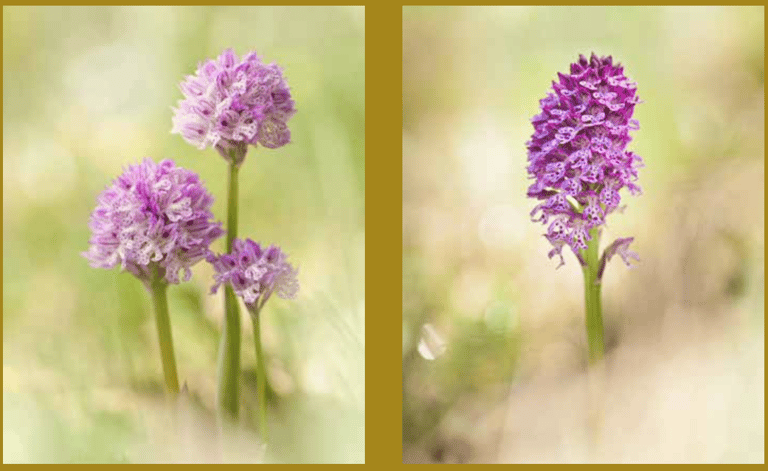
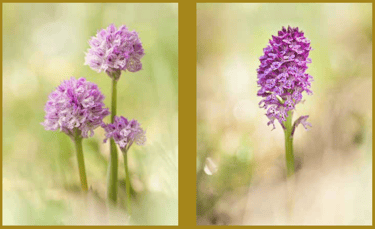
left: three-toothed orchid, right and below: Dietrich's orchid
Wipper Water Gap near Günserode in northern Thuringia
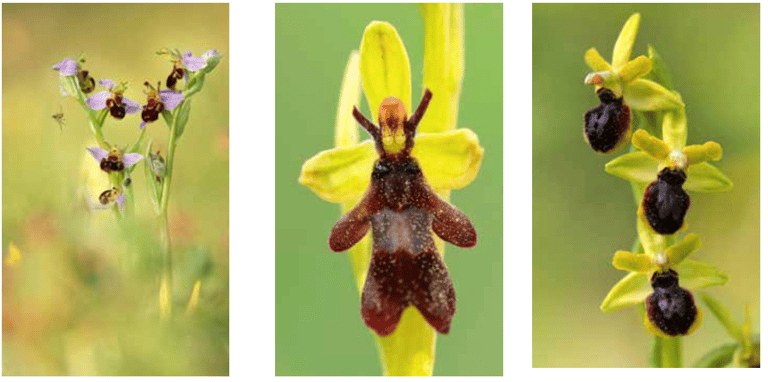
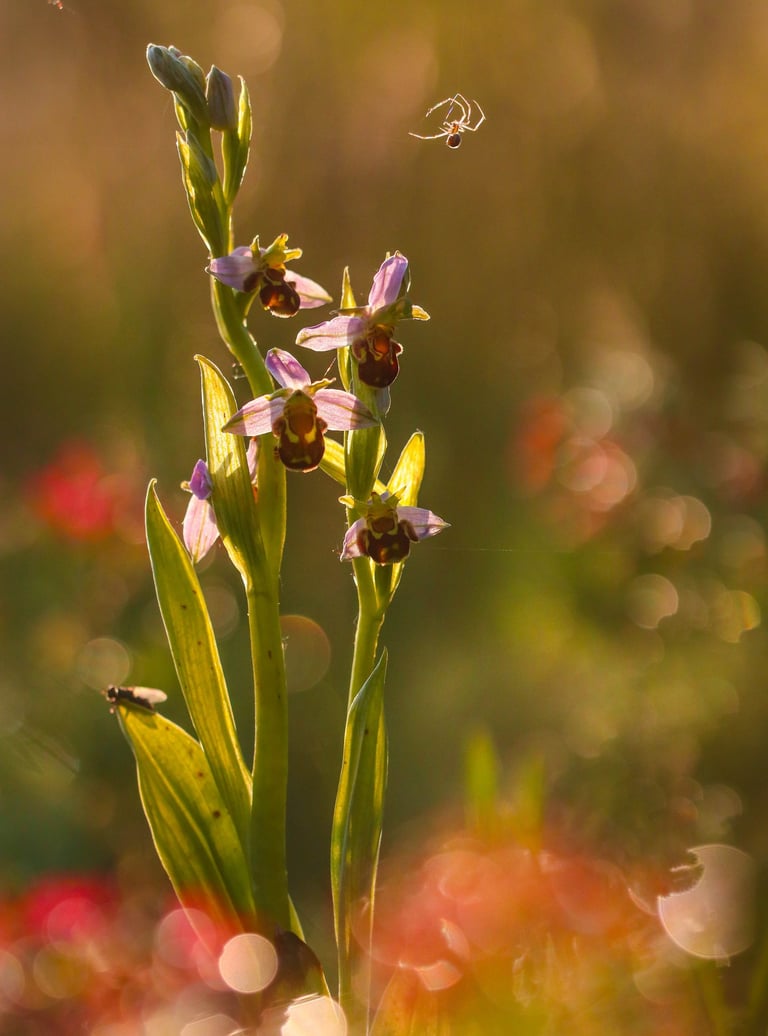
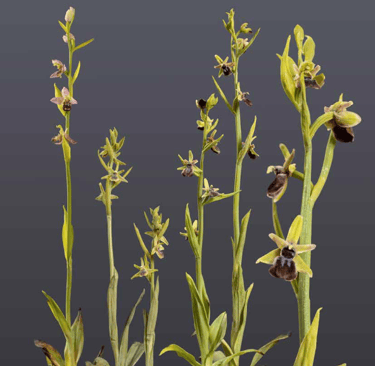
Bee orchid (Ophrys apifera), fly orchid (Ophrys insectifera), early spider-orchid (Ophrys araneola)
The Sophisticated Deceivers – The Bee Orchids
The Bee Orchids (Ophrys) demonstrate in an impressive manner what evolution is capable of producing within the plant kingdom. Their bizarre flowers produce neither nectar nor vibrant colors. Instead, they have taken on the form of certain solitary female mining bees and wasps to attract their male partners and encourage them to mate. During the supposed mating with a partner, the fooled males pollinate the orchid flowers. This relationship goes so far that some Ophrys species have bound themselves exclusively to a single bee or wasp species as a pollinator. This parallel development of the plant through the optimal adaptation of the flower in form and color to its pollinators is known as co-evolution.
The actually Mediterranean Bee Orchid goes one step further. Its pollination partner does not occur in our latitudes at all. Its flowers are able to pollinate themselves without any insect visit.
Four Ophrys species are native to Thuringia: the Bee Orchid (Ophrys apifera), the Fly Orchid (Ophrys insectifera), the Early Spider Orchid (Ophrys araneola), and the Late Spider Orchid (Ophrys holoserica) [1, 2, 4]. They all occur in warm and dry calcareous grassland habitats.
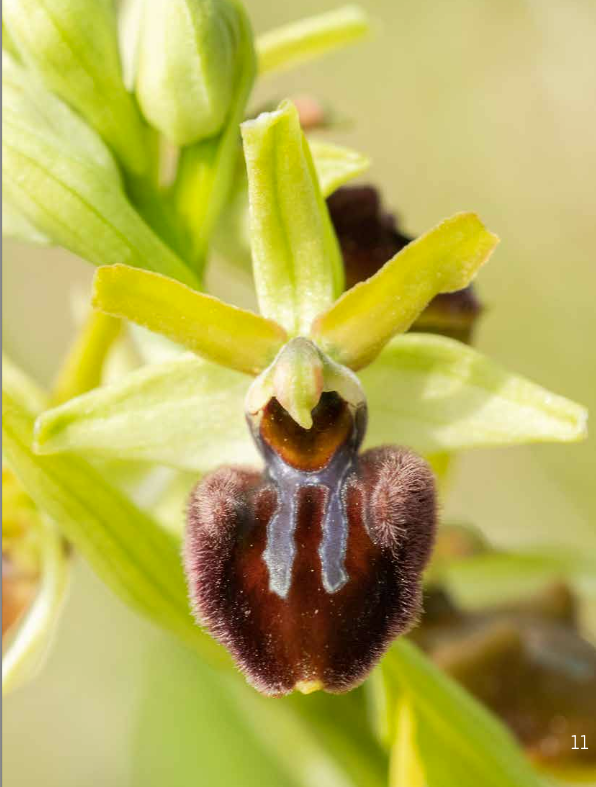
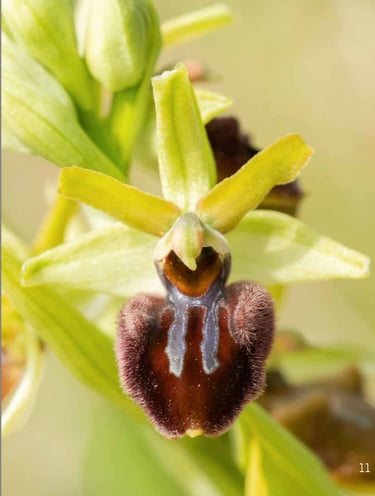
Ophrys sphegodes
Epoxy models by Reco-Brandt
Bee orchid
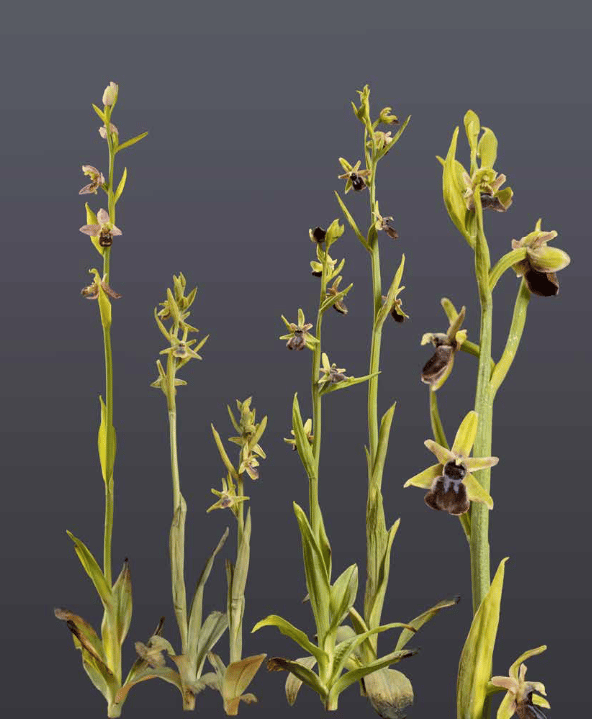
Epoxy models by Reco-Brandt
Bee orchid (Ophrys apifera), early spider-orchid (Ophrys araneola), spider-orchid (Ophrys sphegodes)
Insects: A Flirtation of the "Third Kind" – The Fly Orchid
The specialization of Ophrys species is undoubtedly among the most fascinating plant-animal relationships nature has ever produced. These orchids' flowers mimic not only the appearance of an ideal mate for male bees ready to mate but also her irresistible perfume in the form of species-specific sex pheromones. These are sexual deception flowers that stick their stalked pollen packets (pollinia) onto the insect's head during the supposed mating. When the insect flies to the next presumed partner to mate, these pollinia touch the stigma of another Ophrys flower. Unwittingly and without reward, the male insect merely pollinates another orchid.
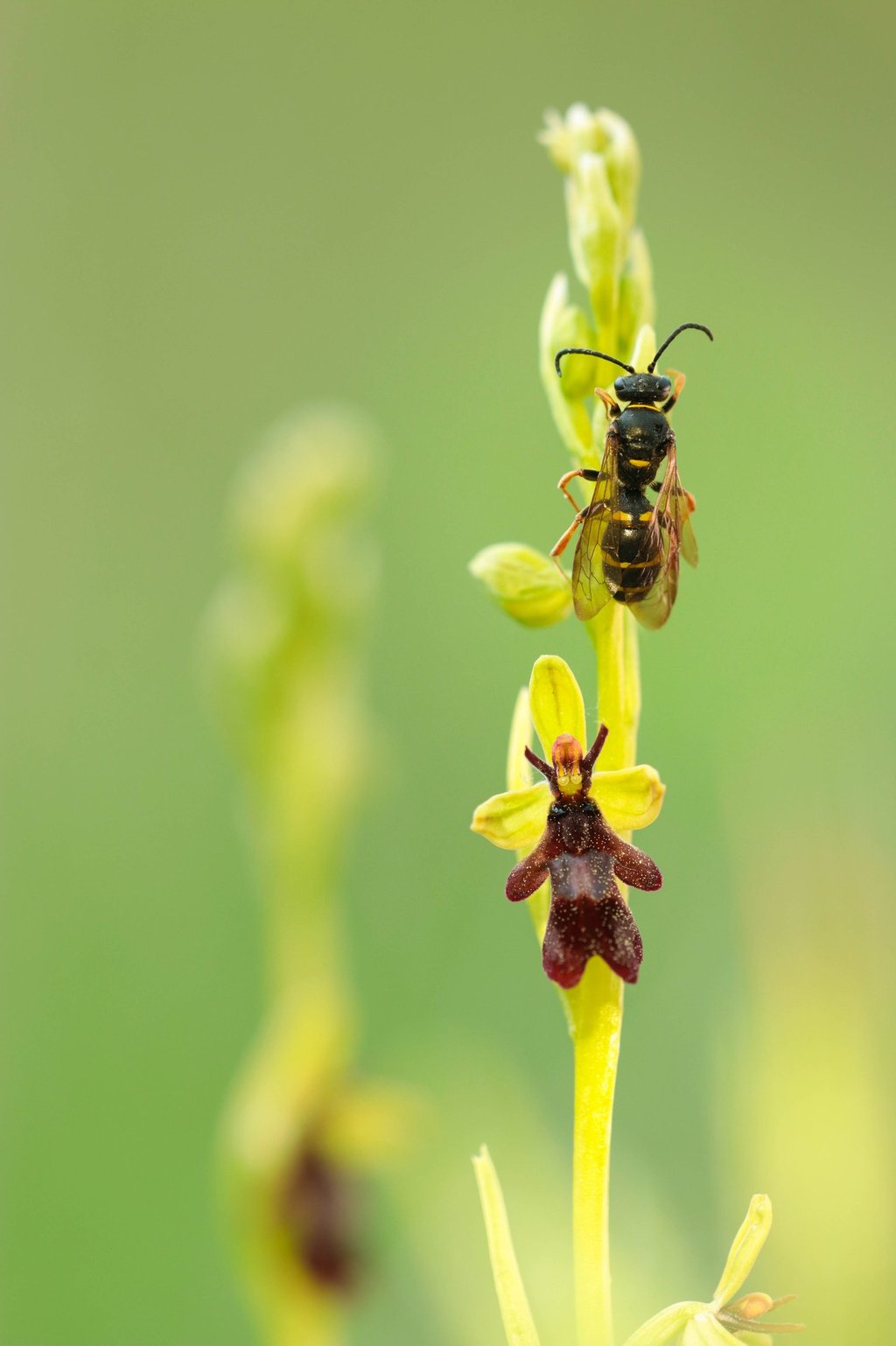
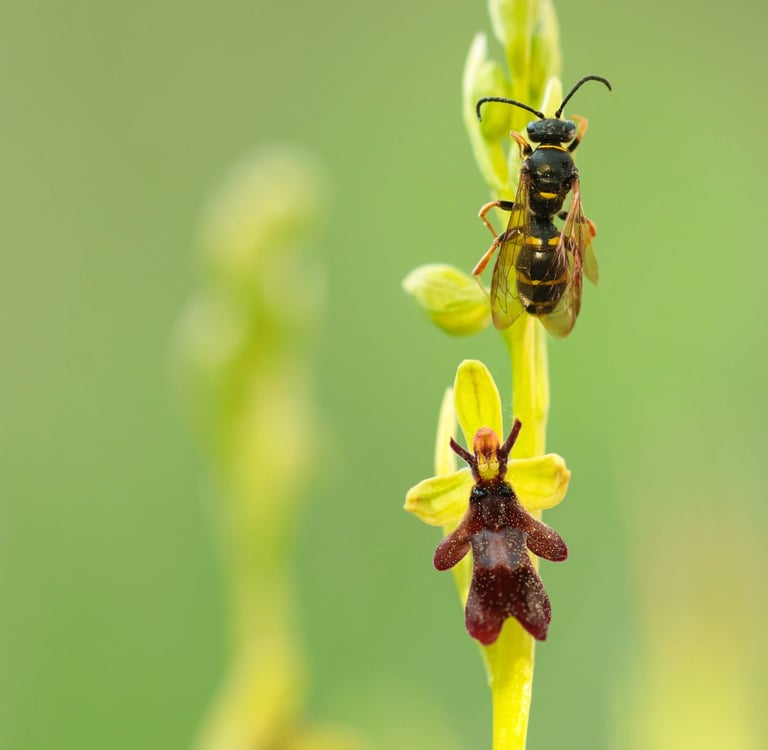
The Fly Orchid (Ophrys insectifera) deceives male digger wasps (Argogorytes mystaceus) with its scent, detectable from kilometers away, which mimics a female ready to mate. The bizarre shape of the flower makes the deception complete; even the orientation of the floral hairs corresponds to those of the female wasp.
Some Ophrys species are so specialized to a single species of Hymenoptera (bees, bumblebees, wasps) that they can no longer reproduce if that species disappears due to human or climatic influences. In this context, the names of these orchids are sometimes misleading, as they are worshiped neither by flies nor spiders, but generally by various threatened species of wild bees.
The shape of the Fly Orchid (Ophrys insectifera) does not actually imitate a 'fly', but rather the female Argogorytes wasp.
Dietrich's orchid Neotinea × dietrichiana, three-toothed orchid Neotinea tridentata, below: burnt orchid Neotinea ustulata, three-toothed orchid Neotinea tridentata
What’s in a Name? – the 'true' Orchids
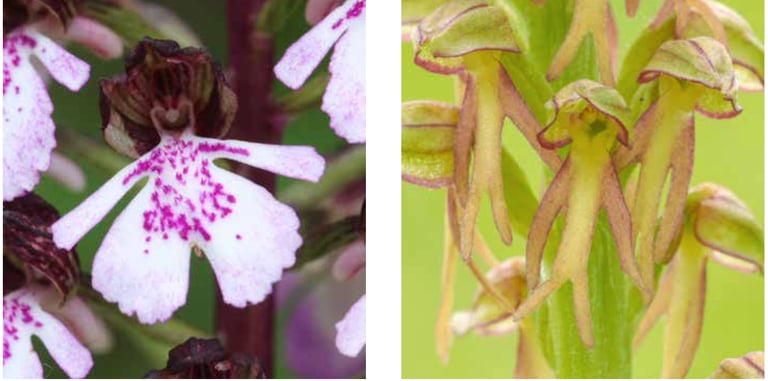
The blooms of many meadow orchids resemble a human-like figure in their outline: the Lady Orchid (Orchis purpurea) and the Man Orchid (Orchis anthropophora) belong to the genus of 'True Orchids'.
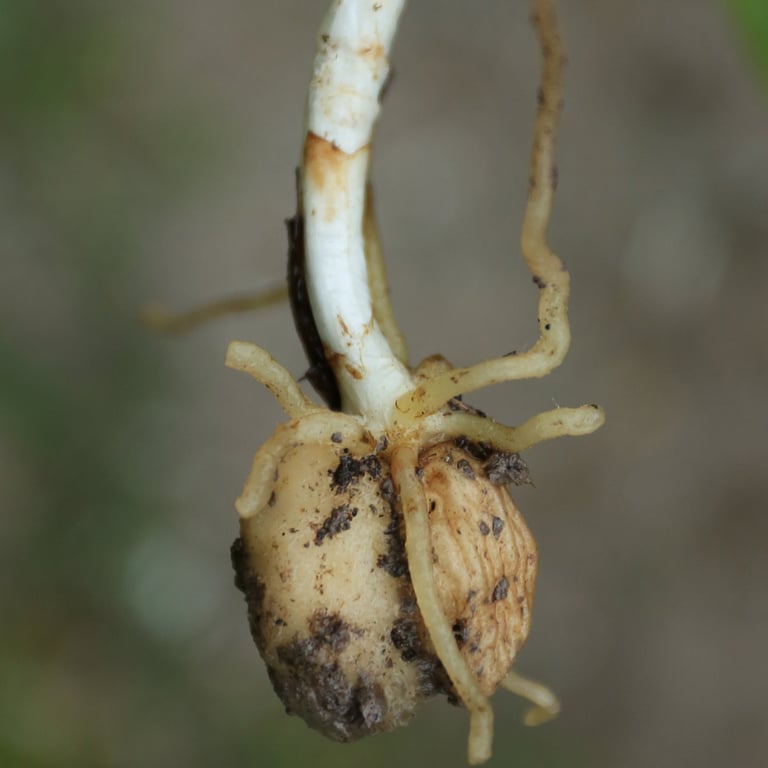
In common parlance, several orchids with pink to purple inflorescences and lance-shaped leaves are colloquially referred to as "Knabenkraut" (boy’s herb). The scientific name for this genus is Orchis—the Greek word for "testicle"—referring to the paired, typically egg-shaped root tubers of these plants. One of these produces the flowering shoot, while the other is already storing the nutrient supply for the following year's growth.
A total of five species of the genus Orchis occur in Thuringia, of which the Military Orchid (Orchis militaris), the Lady Orchid (Orchis purpurea), and the Man Orchid (Orchis anthropophora), along with their natural hybrids, grow in semi-dry grasslands. This "two-tuber strategy"—in symbiosis with specific soil fungi—has proven highly successful throughout the evolution of many orchid genera, particularly in warm and nutrient-poor open-land habitats.
Interestingly, as far back as antiquity, two types of root tubers were distinguished in round-tuber orchids: the large current-year ones and the small previous-year ones. It was believed that the large ones—consumed by men—would result in the birth of boys, while the small ones—enjoyed by women—would result in the birth of girls. In addition to the "true" orchids, there are a variety of other orchids that look very similar to Orchis species and are often referred to as such. These include the fragrant orchids (Gymnadenia).
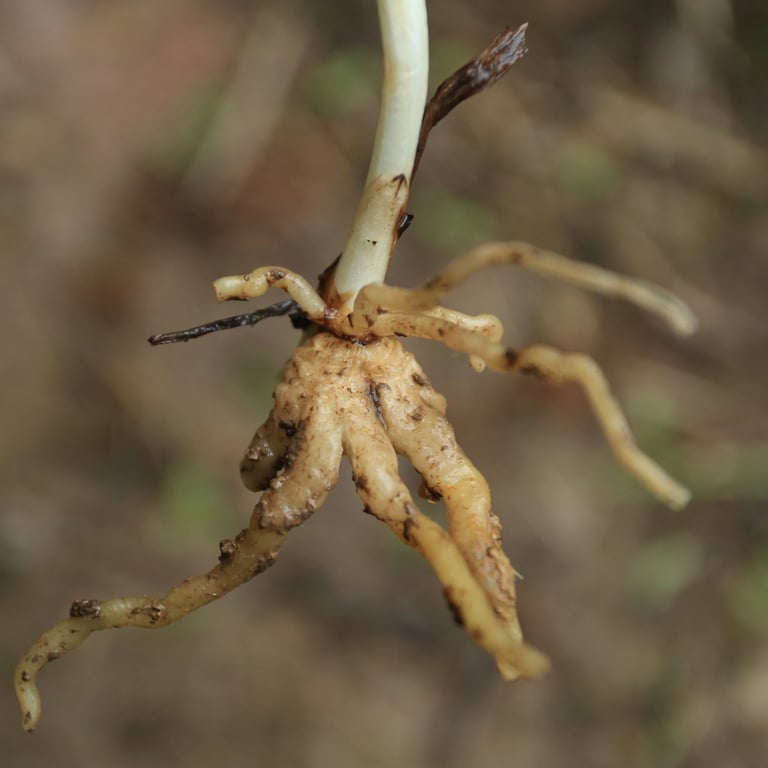
Doch wie der Name schon vermuten lässt, besitzen diese Arten handförmig gelappte Wurzelorgane. In der Vergangenheit führte das rigorose Ausgraben der Wurzelknollen zur Salep-Gewinnung (ein Verdickungs- und angebliches Potenzmittel) beinahe zur Ausrottung vieler Orchideen-Arten. Ein Trend, der auch heute noch in mediterranen Ländern anhält.
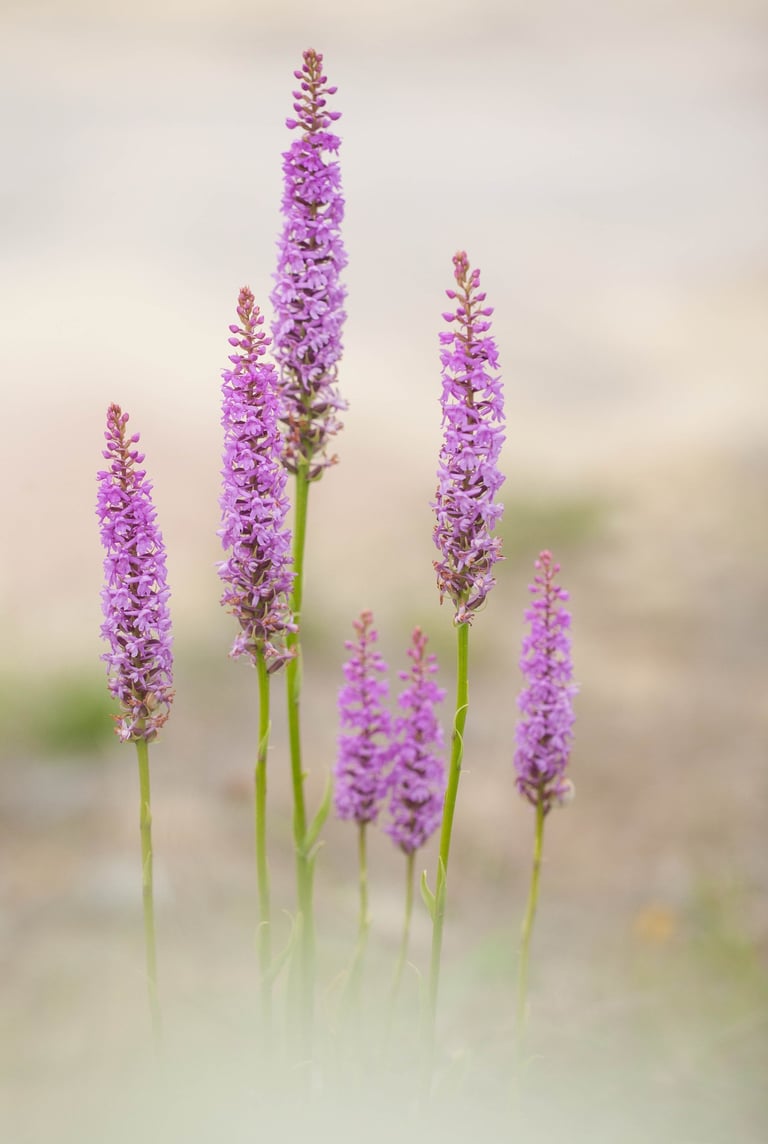
Mücken-Händelwurz (Gymnadenia conopsea)
Hand-shaped (palmate) root tubers of a fragrant orchid (Gymnadenia)
Oval, paired root tubers of an Orchis orchid
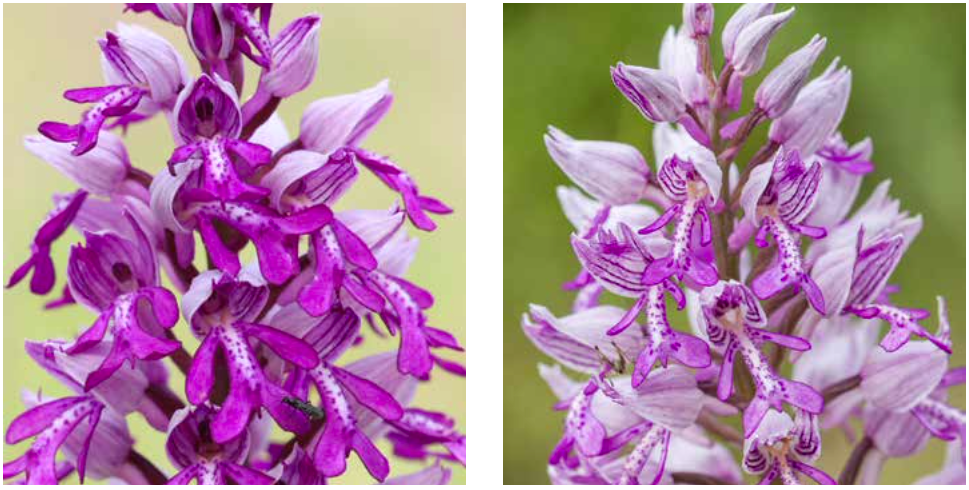
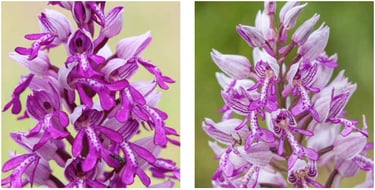
A "protective helmet" formed by the upper petals to shield pollinia and stigma is typical—and not only for the Military Orchid (color variants).
Hybridization – when different species mate
Hier ist die fachwissenschaftliche Übersetzung für deine Webseite:
"It is often very difficult to distinguish individual orchid species from one another. Where similar species grow in close proximity, so-called parent plants regularly cross-pollinate. The resulting offspring are called hybrids. In their impressive and color-intensive appearance, various characteristics of the parent plants are blended and enhanced.
Plants resulting from hybridization are often larger and more robust than both parent species and are therefore usually more conspicuous (heterosis effect). The hybrid orchid (Orchis × hybrida)—a cross between the Military and Lady Orchid—and Spath’s orchid (Orchis × spuria)—a cross between the Military and Man Orchid—exemplify this. Furthermore, they are more resistant to disease and more adaptable to their habitat, often allowing them to compete more successfully at their growing site.
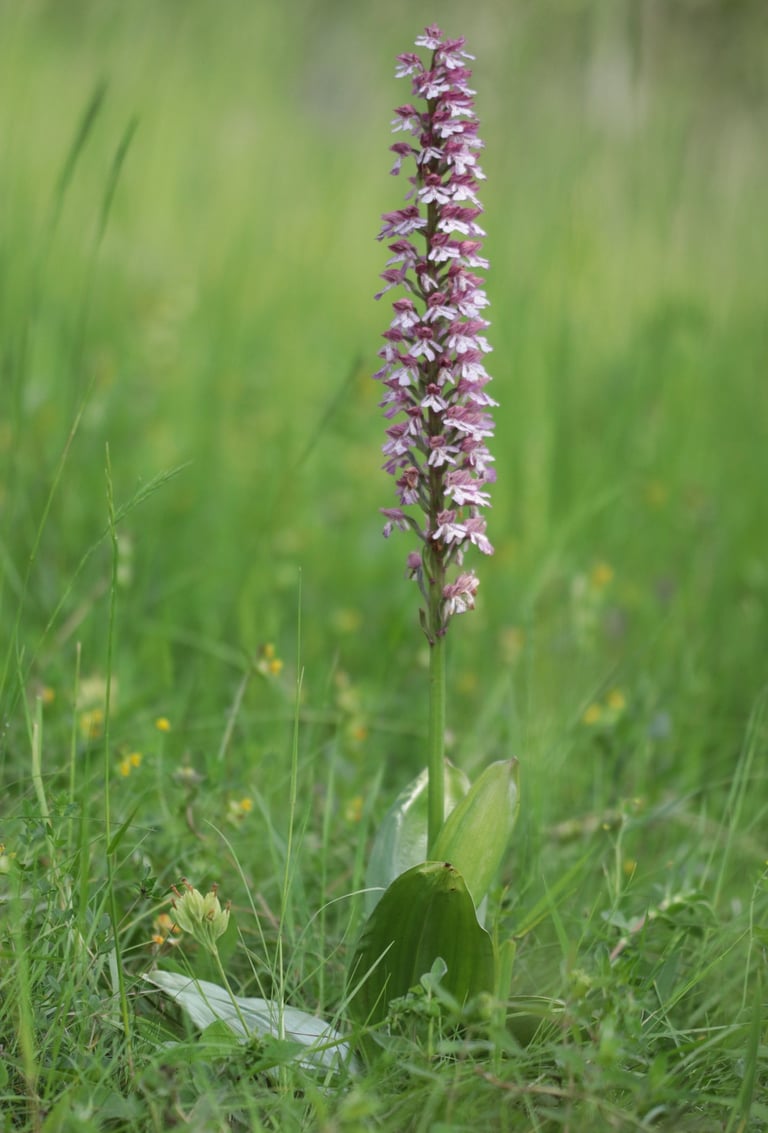
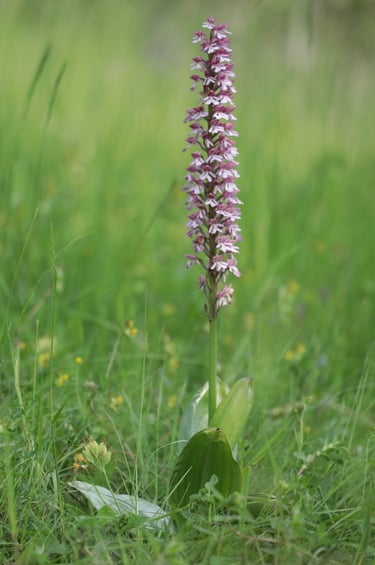
Orchid hybrids can reach immense sizes (Hybrid Orchid).
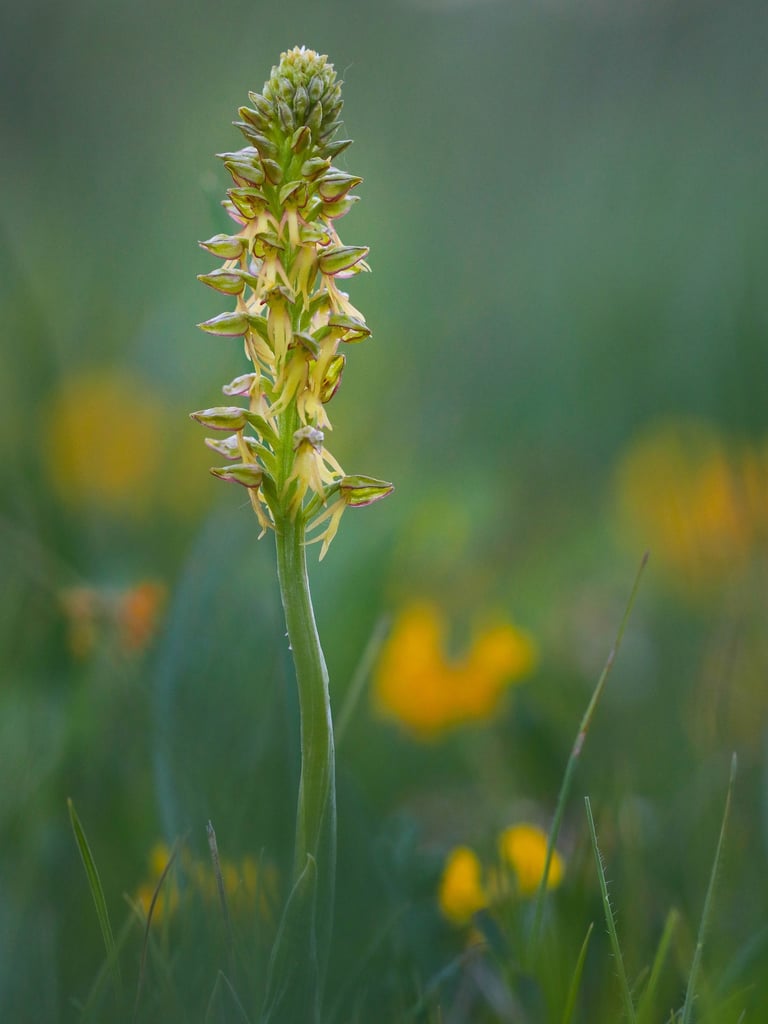
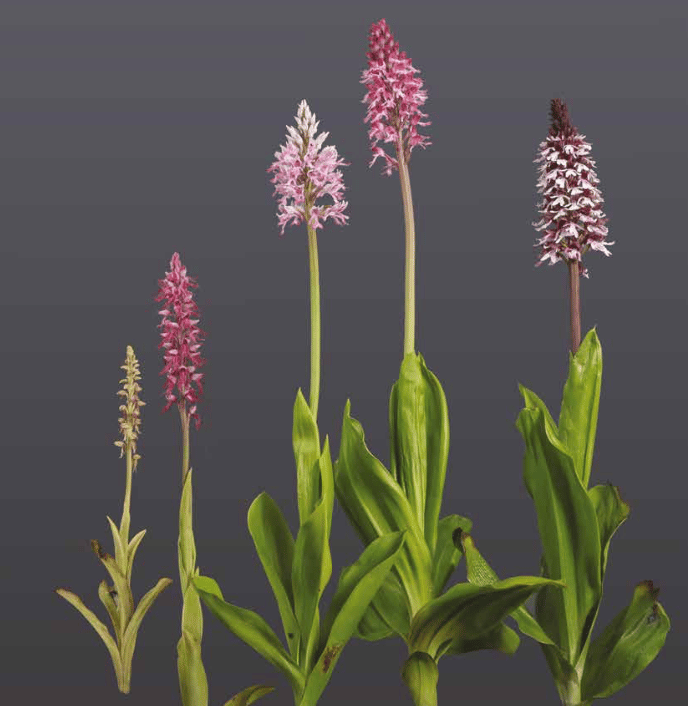
Epoxy models by Reco-Brandt
Man orchid (Orchis anthropophora), Spath’s orchid (Orchis × spuria), military orchid (Orchis militaris), hybrid orchid (Orchis × hybrida), lady orchid (Orchis purpurea)
The thermophilous man orchid is very rare in Thuringia but benefits from current global warming—like the lizard orchid, among others, it originates from the Mediterranean region.
The Lizard Orchid – A Winner of Climate Change
With its extremely elongated, spring-like twisted labella and its sweet yet pungent goat-like scent, the tall-growing lizard orchid (Himantoglossum hircinum) is arguably one of the most striking sights in the native orchid world.
The lizard orchid possesses winter leaves that often show frost damage in our latitudes and already begin to wither during the flowering period. With these leaves, the plant gathers energy during the winter months for the following year's bloom, storing it as starch in its tubers. This strategy is employed by several orchid species and represents an adaptation to particularly warm and dry locations. Like several other orchids found in Thuringia, its original range is the Mediterranean region, and it only arrived here with the introduction of viticulture in the Middle Ages. It benefited from the favorable climate, deforestation, and sheep grazing. Consequently, the climate change of the last three decades, with increasingly dry, hot summers and wet, mild winters, has favored the expansion of the lizard orchid in Thuringia.
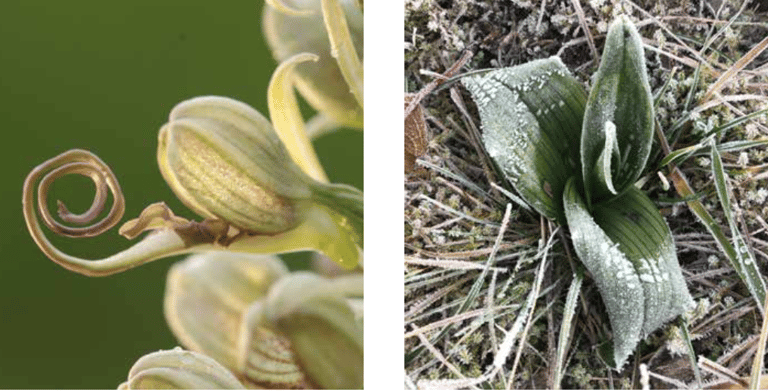
The elongated, strap-shaped labellum of the Lizard Orchid (Himantoglossum hircinum) unfurls as it blooms.
Winter leafs in January
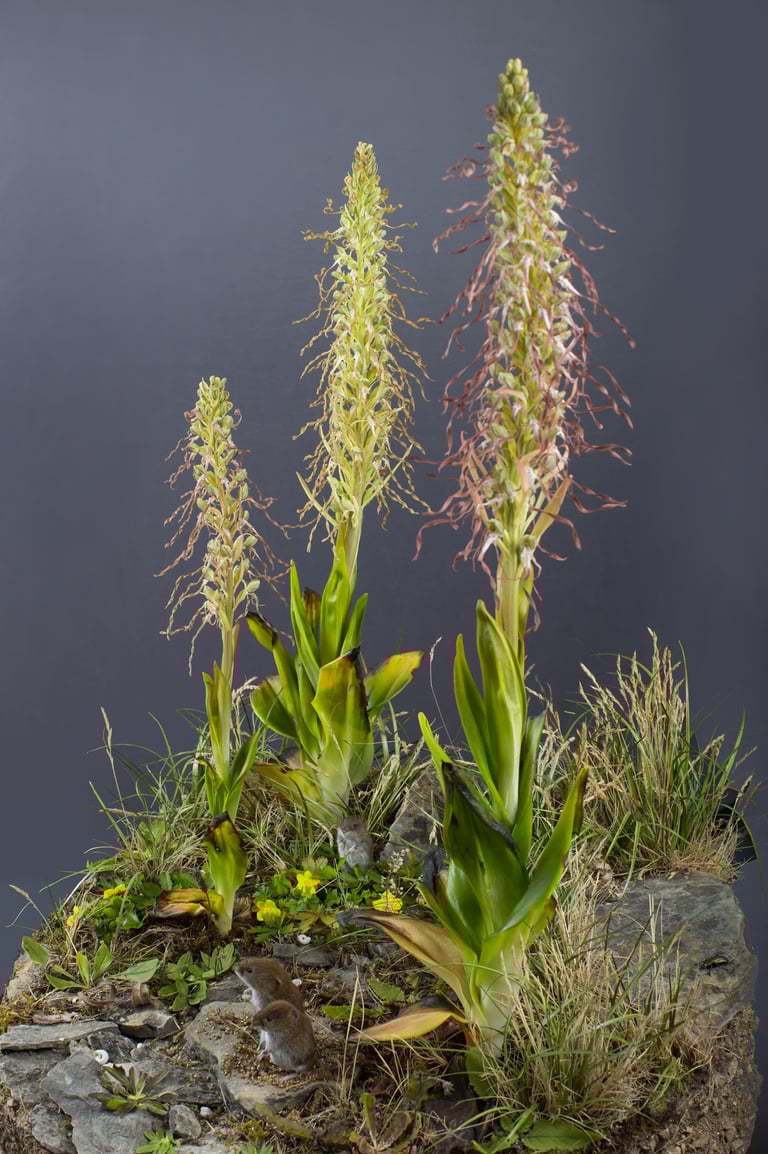
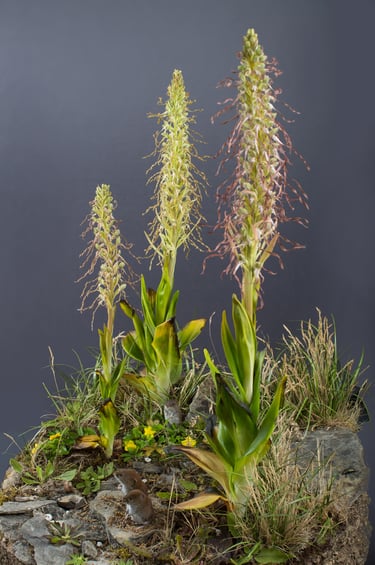
Plastic models of the lizard orchid – Habitat diorama by Sebastian Brandt
Fragrances in the Night – The Butterfly Orchids
As evening falls, a sweet fragrance drifts across the orchid meadow, luring nocturnal moths to the blossoms of the butterfly orchids (Platanthera). With their long proboscises, they find a narrow entrance into a tube over three centimeters long, filled with nectar. This spur-like tube is typical for orchids whose pollinators are lepidopterans. The two native butterfly orchid species distinguish their target insects very precisely.
The greater butterfly orchid (Platanthera chlorantha) has slanted pollen packets, which it attaches primarily to the eyes of owlet moths as they drink nectar. In contrast, the pollinaria of the lesser butterfly orchid (Platanthera bifolia) stand vertically and very close to the spur entrance. Hawkmoths, in particular, have these attached directly to their body-length proboscis while enjoying the nectar. Adorned with pollen in this way, the moths' next floral visit will pollinate the stigma of another butterfly orchid.
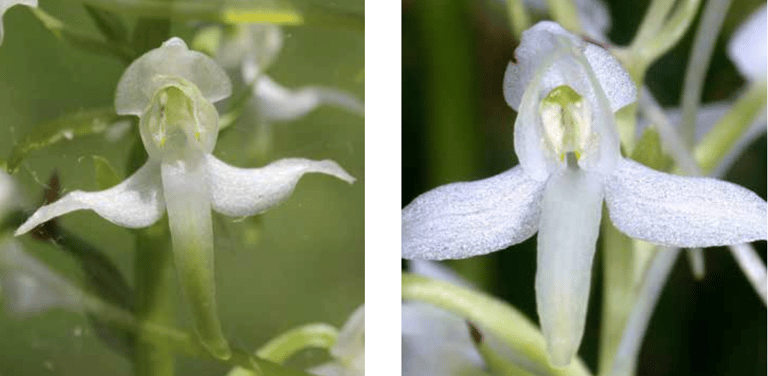
Grünliche Waldhyazinthe mit breit angewinkelt stehenden Pollinarien
Weiße Waldhyazinthe mit parallelen Pollinarien
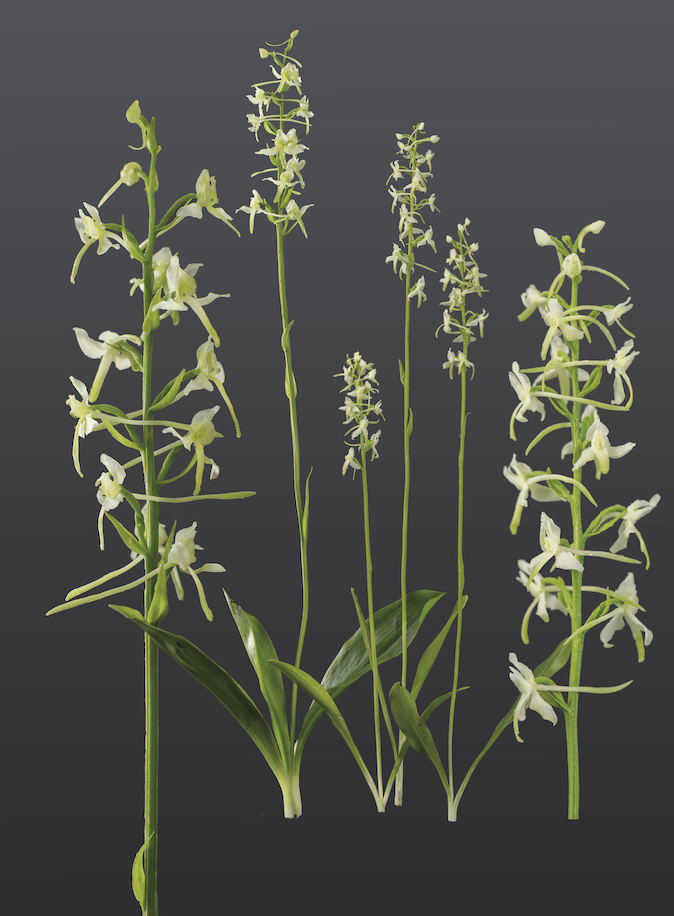
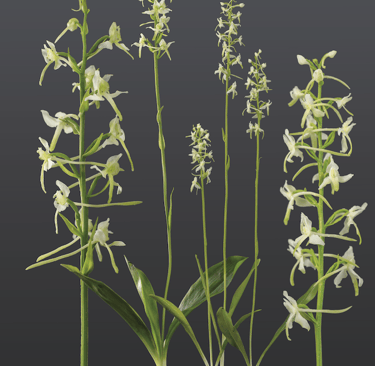
Greater butterfly-orchid (Platanthera chlorantha), lesser butterfly-orchid (Platanthera bifolia)
The Return of the Pharaoh – The Pyramidal Orchid
Although the flowers, like those of the similar fragrant orchids, develop long spurs and attract lepidopterans, there is nothing for the insects to find. These are so-called nectar deception flowers, which merely imitate a rich source of nectar with their vibrant colors. By the time the moths notice the deception, their heads and proboscises have long since been covered with pollinia, and the stigmas have been pollinated. In this way, the orchid avoids the energy-intensive production of nectar.
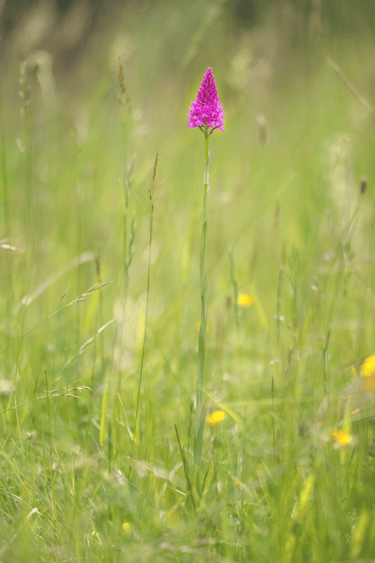
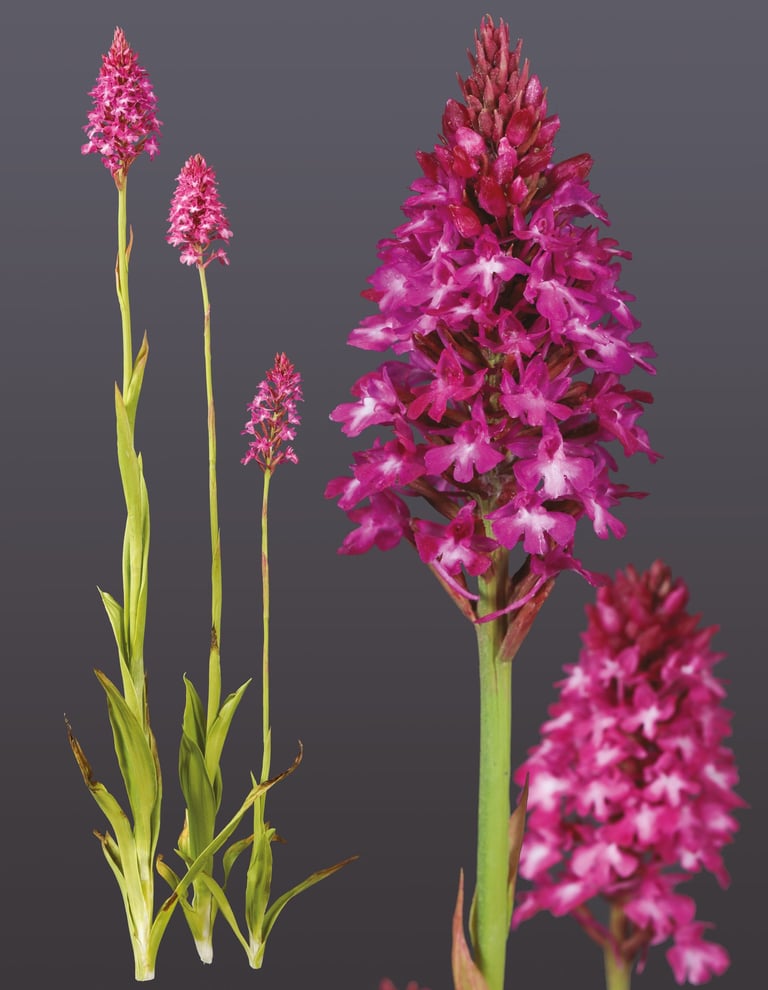
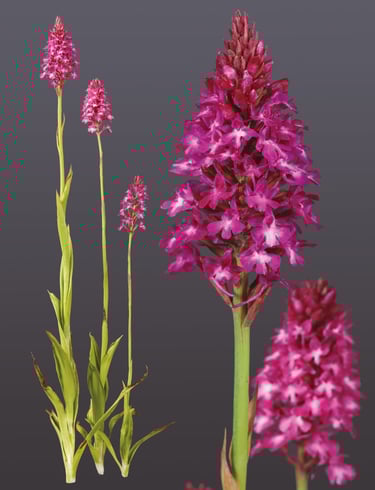
With its uniquely brilliant carmine red, the pyramidal orchid (Anacamptis pyramidalis) is undoubtedly the most colorful orchid species in Thuringia. One almost had to say 'was' rather than 'is'—because of the loss of traditional management practices and increased nutrient input into the calcareous grasslands, the species had been considered extinct in Thuringia since the first quarter of the 20th century.
Around the year 2000, several microscopic seeds were intentionally released into the wind at the former Rothenstein military range near Jena. Just three years later, eight flowering pyramidal orchids were successfully documented.
By now, the population there has grown to over 1,400 flowering plants. This reintroduction was successful and brings an attractive species back to Thuringia.
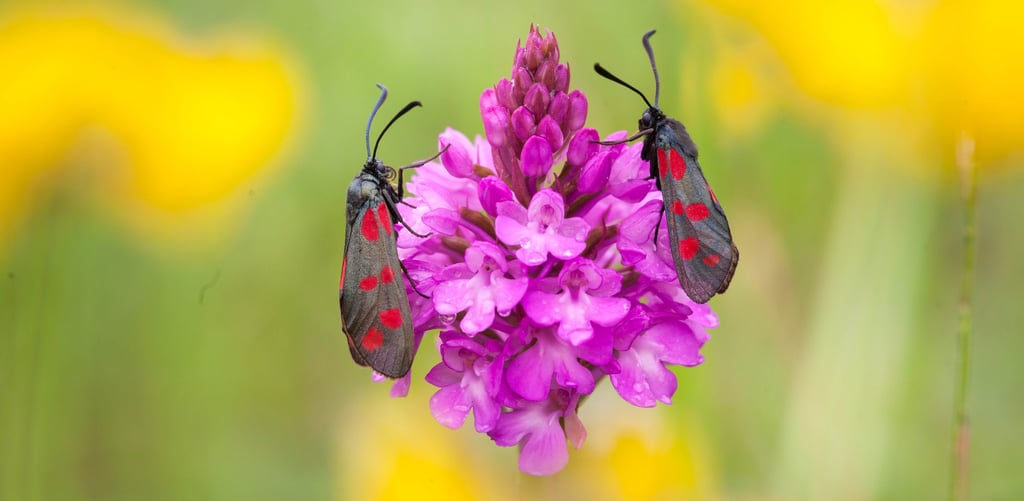
The pyramidal orchid is pollinated by burnet moths, among others, even though it does not produce any nectar.
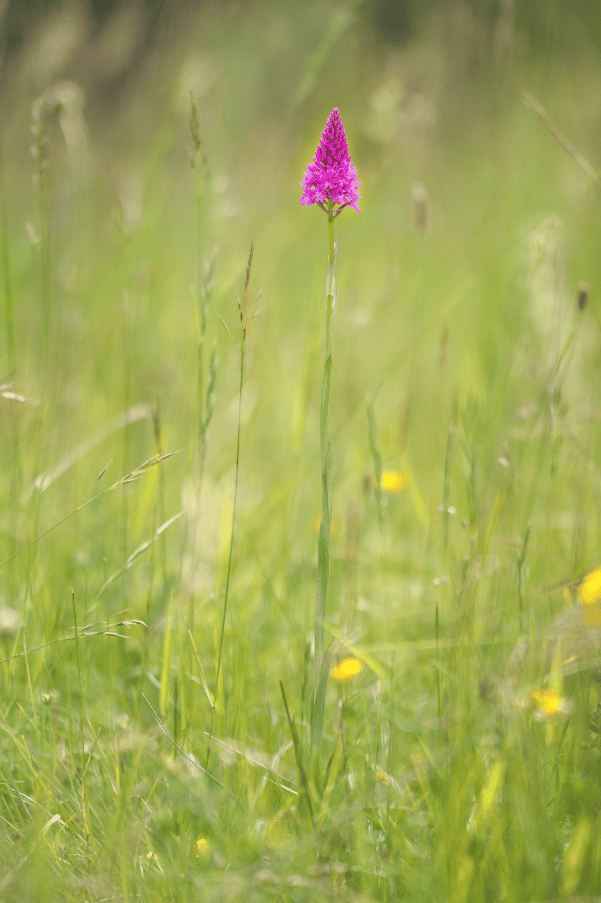
Epoxy model by Sebastian Brandt
ts magnificent, triangular-shaped inflorescence earned it the name pyramidal orchid. The allusion to ancient Egypt is not so far-fetched, as the plant originates from the Mediterranean region. This is particularly evident in the fact that—like the lizard orchid and the bee orchids—it develops so-called winter leaves, which are photosynthetically active from October onwards. By the time the plant flowers, these leaves already appear withered and damaged by frost.
With its long stem, the pyramidal orchid is a typical meadow orchid.
Pyramidal orchid (Anacamptis pyramidalis)
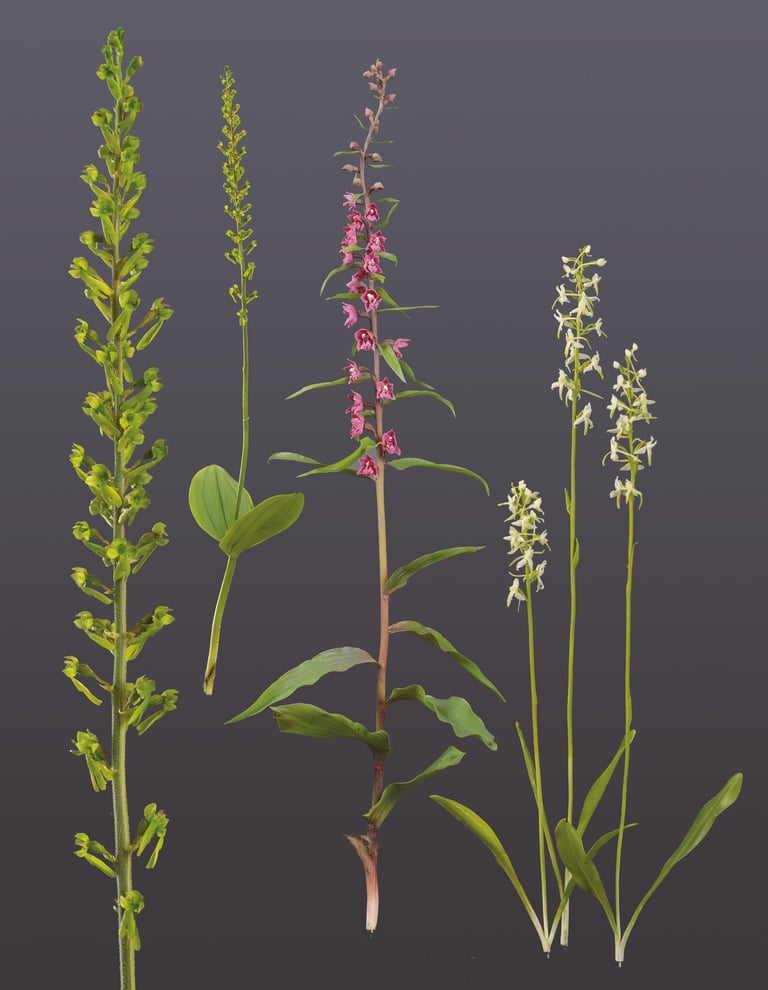
Common twayblade (Neottia ovata), dark-red helleborine (Epipactis atrorubens), fragrant orchid (Gymnadenia conopsea)
Gone with the Wind – Tiny Seeds Made for Flight
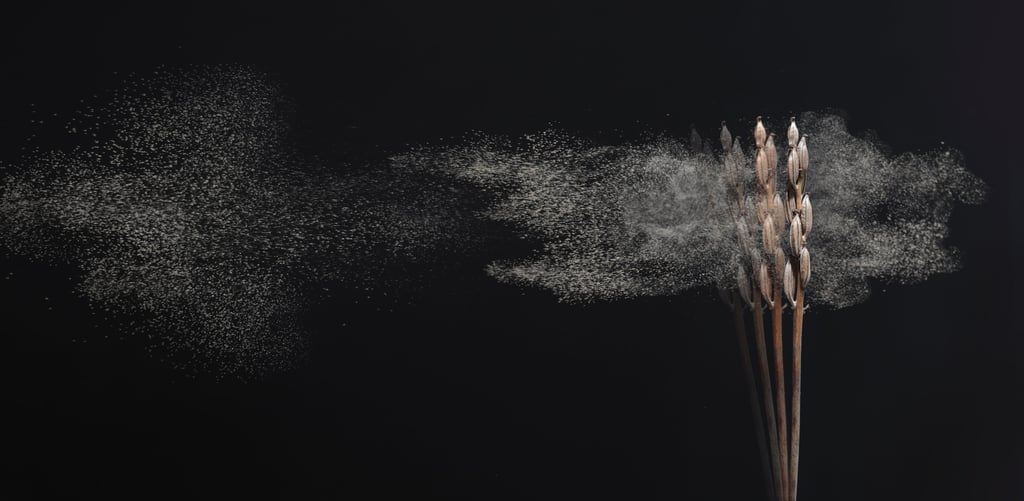
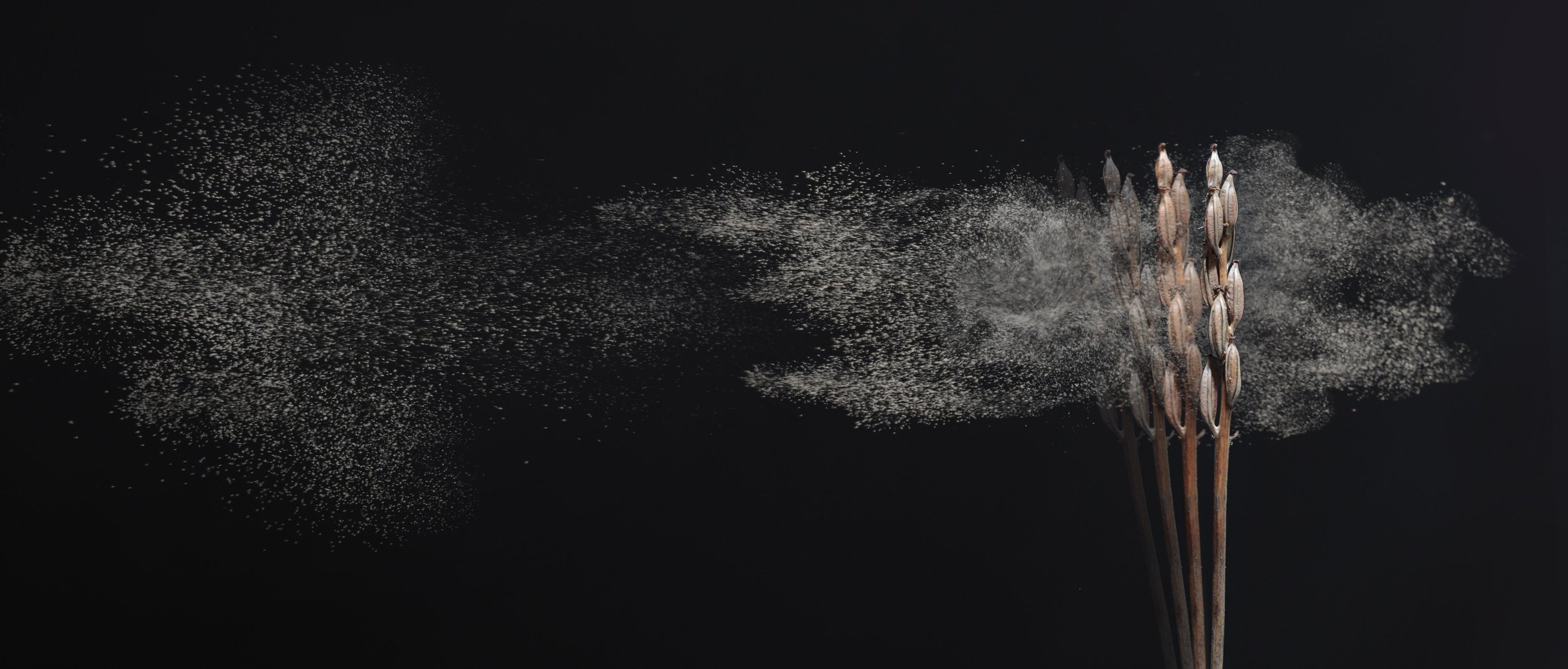

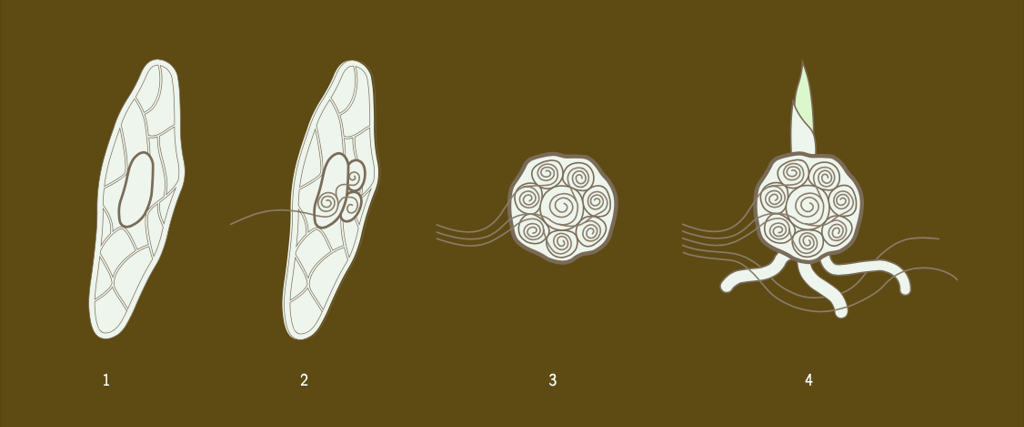
Orchids produce microscopic seeds, allowing thousands of them to fit into a single seed capsule. Once ripe, up to 100 of these capsules burst open on the withered inflorescence. The wind carries the seeds away, sometimes over many kilometers; however, only very few land in a suitable habitat.
Due to their minuscule size, orchid seeds contain no endosperm or nutrient reserves, unlike other plants. As a result, they cannot germinate independently with just moisture and light. The tiny seed relies on fungal filaments in the soil, which grow into its cells. The developing orchid then extracts water and nutrients from the fungal mycelium to begin germinating and growing.
A so-called symbiotic embryo forms, which sometimes grows exclusively underground for many years while remaining tethered to the fungus. Only then does the young plant push its first leaves toward the light, gradually beginning to separate from the fungus and perform photosynthesis. Many orchid species, however, remain connected to and dependent on their fungi throughout their entire lives.
The seed capsules of an orchid scatter millions of microscopic seeds into the wind when shaken.
Figs. 1 + 2: A sail-like, enlarged seed coat provides an effective surface for the wind to catch;Figs. 3 + 4: After landing, fungal filaments (hyphae) penetrate the seed, which then begins to grow into an orchid plant through their nutrient supply.