

Publications
The publications of Sebastian Brandt operate at the intersection of natural science, reconstruction, and design practice. They address the question of how extinct organisms, historical habitats, and complex ecological relationships can be represented in a comprehensible and credible manner based on current research. The focus lies on botany, paleontology, and natural history model making as a mediating medium between science and the public.
Brandt’s work is based on intensive engagement with scientific literature, original fossil finds, and continuous exchange with experts from various disciplines. His publications cover topics such as functional anatomy, paleoecology, evolutionary processes, hybridization, and the reconstruction of historical landscapes and ecosystems.
Scientific Reconstructions – between research,design and communication
Fauna
Publications on various habitat dioramas by Sebastian Brandt
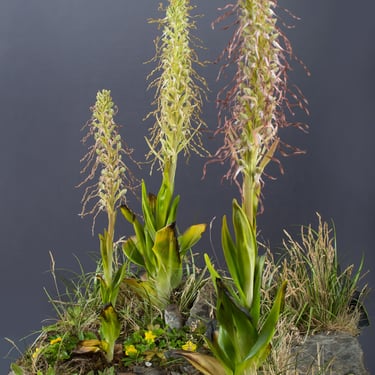
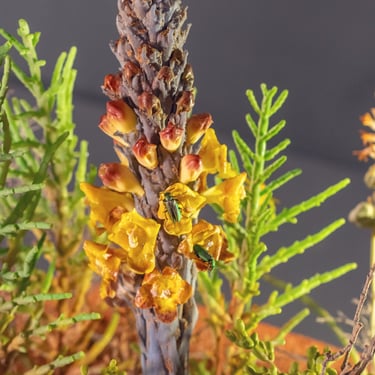
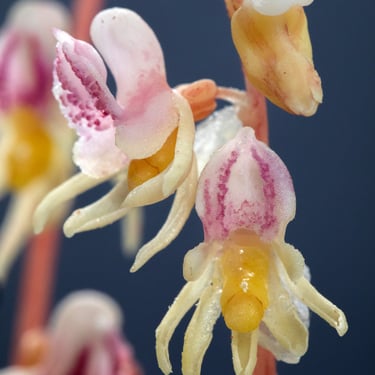
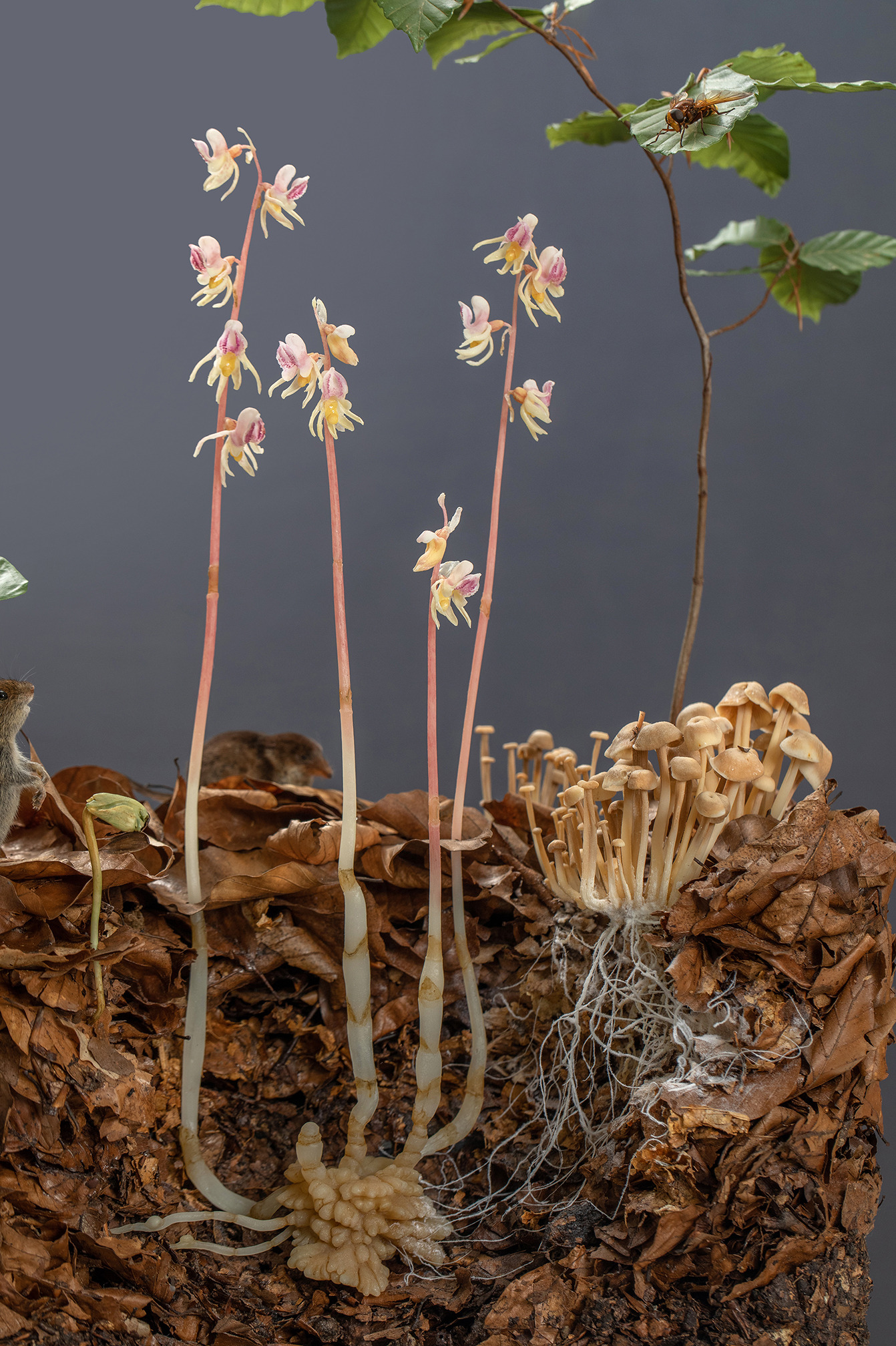
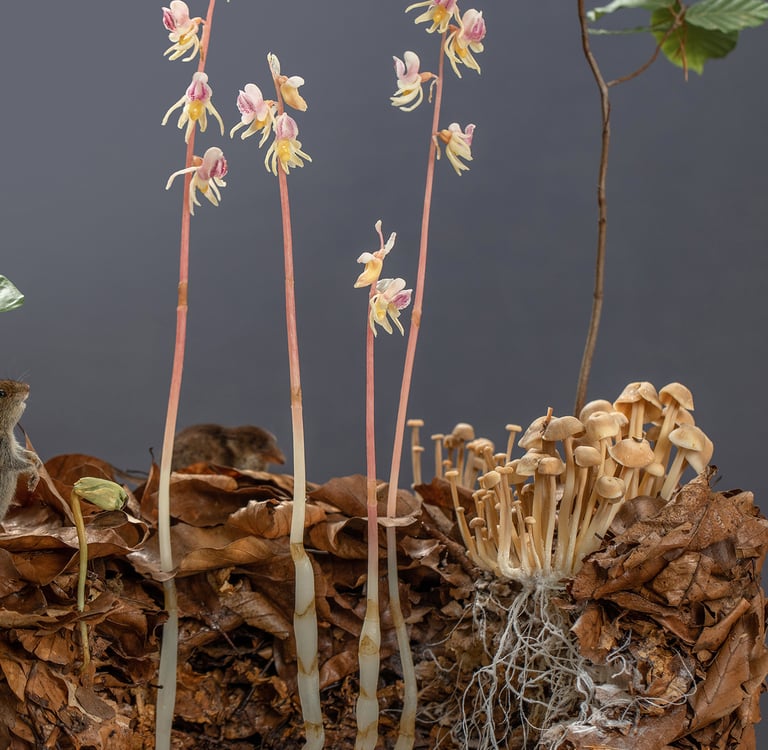
Epipogium aphyllum – the ghost of the forest
Sebastian Brandt
Summary
The mysterious Ghost Orchid (Epipogium aphyllum) is truly an enigmatic gem. It is justifiable to say that it stands at the pinnacle of floral evolution. As a fully mycoheterotrophic plant, it is incredibly rare to find—mostly occurring in ancient, shaded, and nearly untouched beech forests with old-growth trees, abundant deadwood, and a thick layer of leaf detritus. Over the course of its evolution, this bizarre orchid has completely linked its metabolism with saprobic fungi.
Brochure for download
Epipogium aphyllum with beech sprou
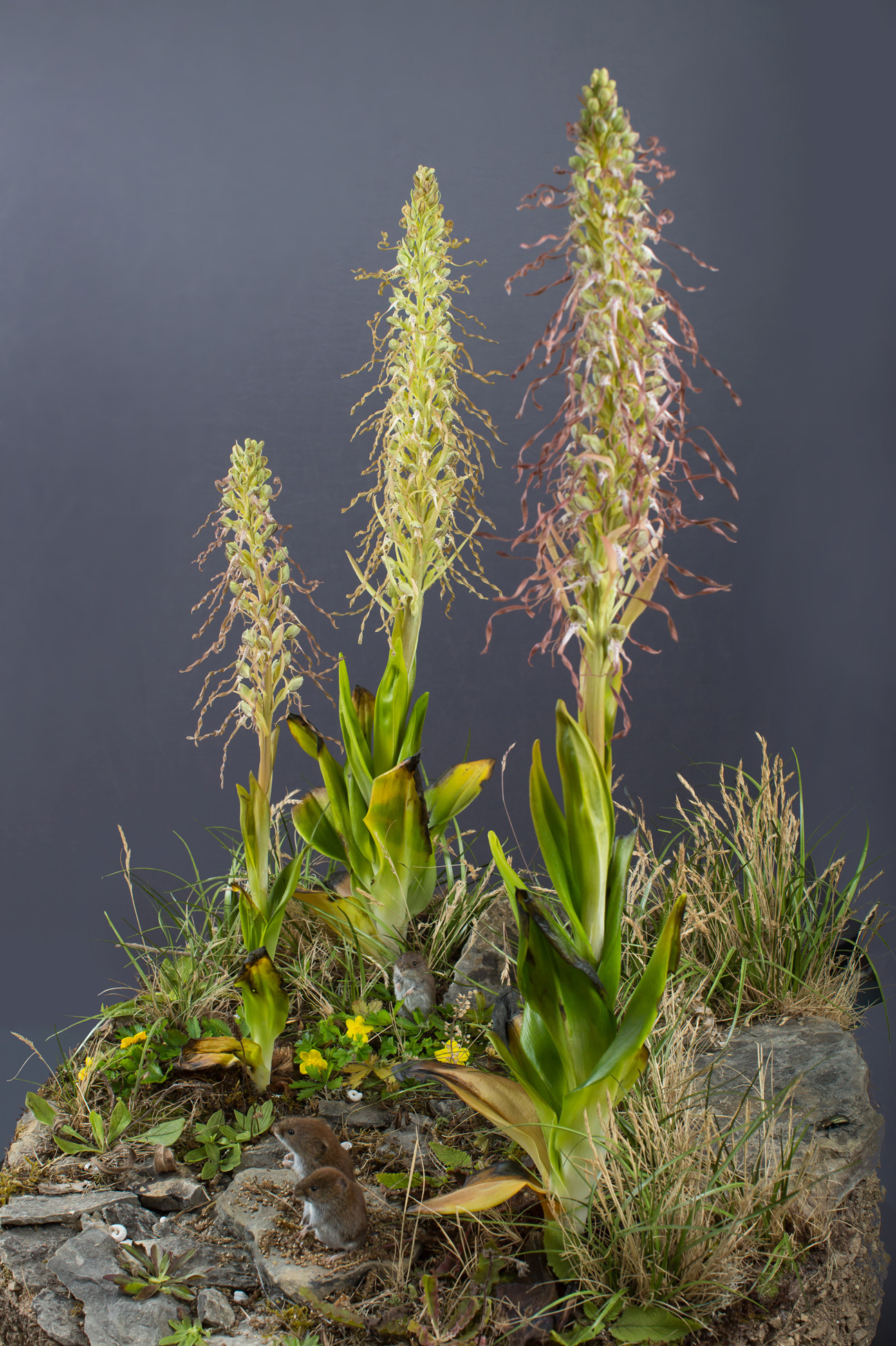
Kalkmagerrasen Lebensraum-Diorama
Sebastian Brandt
Zusammenfassung
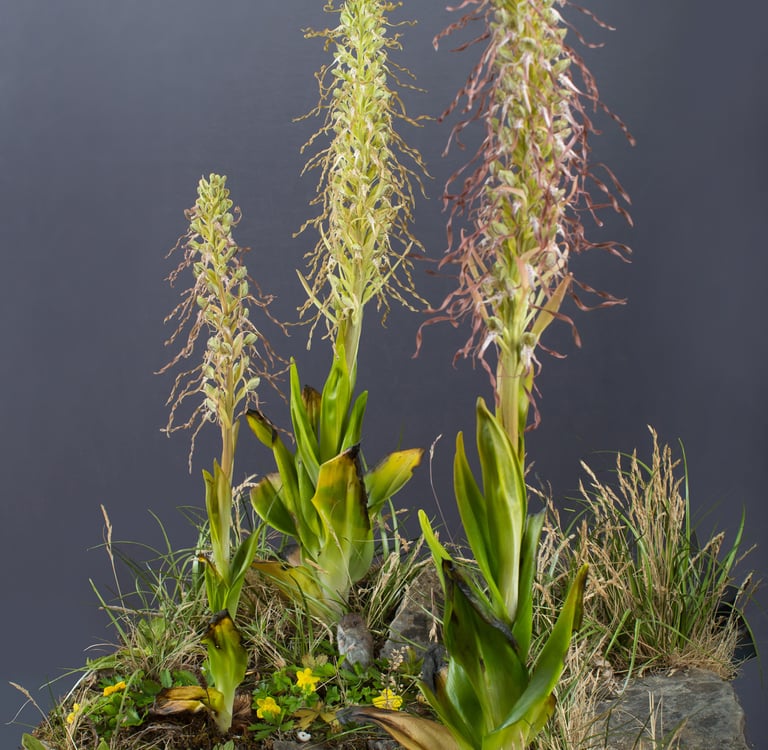
he exceptionally species-rich ecosystem of lime-rich, nutrient-poor dry grassland provides a habitat not only for the Lizard Orchid but also for many other plant species, of which only a select few can be showcased here. One aspect illustrated by the exhibit is the multi-layered structure of this open-land biotope—a perspective often hidden from hikers, who typically perceive it only from above.
Like trees in a miniature forest, the tall fruiting stands of the Lizard Orchid tower above the field of vision of voles. Below this lies the layer of grasses and herbs, and at the very bottom, the ground-level vegetation—often consisting of mosses, lichens, and the basal leaf rosettes of young flowering plants, nestled within the decomposing substrate of dead plant matter. Each of these levels hosts its own, often hidden, animal inhabitants, each perfectly adapted to its specific environment.
Brochure for download
Lizard Orchid Habitat Diorama
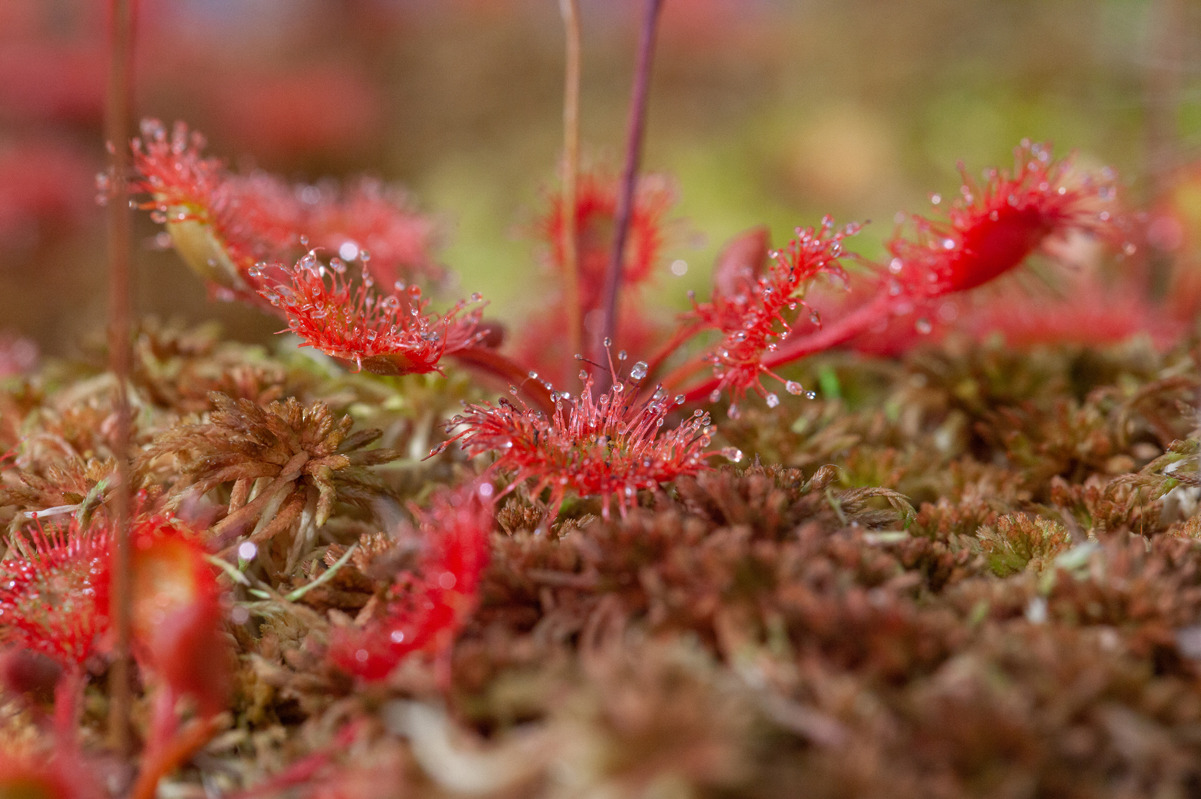
In the Niche of the Sundew – The Hidden Life of Raised Bogs
Sebastian Brandt
Summary
Life in raised bogs is a hidden treasure. As some of the most endangered ecosystems, these habitats are threatened by numerous human-induced factors—not only drainage and peat cutting but also climate change, as they depend entirely on a stable, long-term rainwater balance and sufficient moisture. It is an extreme ecosystem with acidic, nutrient-poor peat soil, built up over hundreds of years by various species of peat moss (Sphagnum). Simultaneously, bogs possess the largest carbon dioxide storage capacity of all terrestrial habitats.
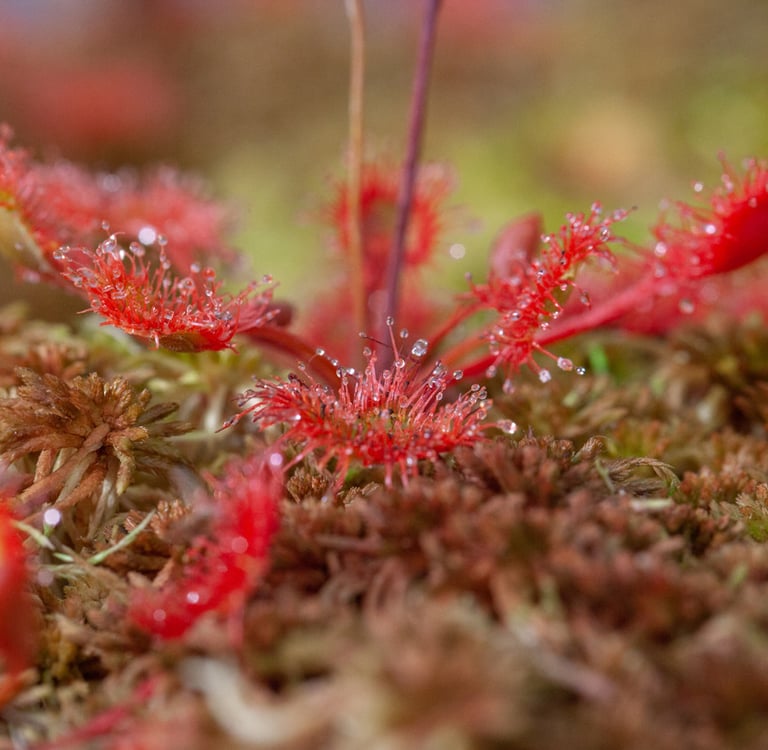
Raised bogs are home to some truly unusual evolutionary experiments—real natural specialists. The round-leaved sundew (Drosera rotundifolia) is a bizarre carnivorous plant.
Brochure for download
Sundew habitat diorama
Its roots serve merely as rudimentary anchors to secure the small, fragile plant amidst the wet peat moss—not for nutrient uptake, as the soil contains virtually no nutrients, especially nitrogen. Instead, its leaves have evolutionarily transformed from pure photosynthetic organs into highly complex insect traps. Arranged in a small rosette close to the ground on slender stalks, they are densely covered with glistening, reddish glandular hairs. Each of these hair-like structures bears a sparkling, sweet-scented, nectar-like droplet—irresistible to small insects such as flies, bees, bugs, and even butterflies. In the early morning light, they shimmer like dew. Yet, they are not dew, but extremely sticky secretions of this cunning plant, filled with digestive enzymes capable of extracting all necessary nitrogenous compounds from any insect prey unwary enough to land on this precious trap. Upon contact, the animal is instantly stuck, and within about an hour, nearly all of the sundew leaf's tentacles move inward toward the victim through a specialized, pulse-like, and asymmetrical growth process to begin digestion. After two to three days at most, only the empty chitinous exoskeleton and the wings of the insect remain.
Other typical plants of this unique habitat include hare’s-tail cottongrass (Eriophorum vaginatum), bog bilberry (Vaccinium uliginosum), and small cranberry (Vaccinium oxycoccos). The fauna here is equally remarkable, particularly among insects, such as the precious cranberry blue butterfly (Plebeius optilete) and various predatory ground beetles (Carabus sp.). Vertebrates are relatively rare in these nutrient-poor areas; among the more common species are insectivores like the pygmy shrew (Sorex minutus) and the lesser white-toothed shrew (Crocidura suaveolens).
Early Terrestrial Vertebrates
Contributions on Eudibamus cursoris, Diadectes absitus, Ichniotherium cottae, Orobates pabsti, and Ichniotherium sphaerodactylum by Sebastian Brandt.
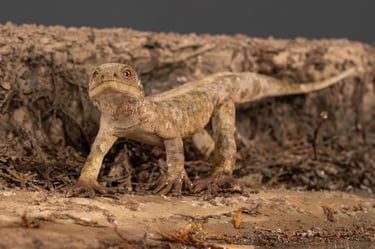
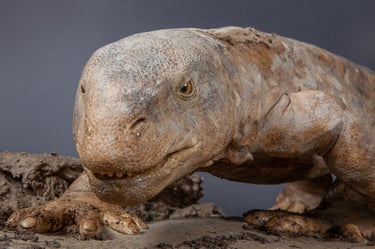
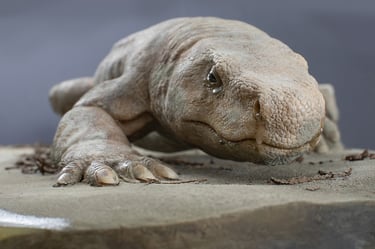
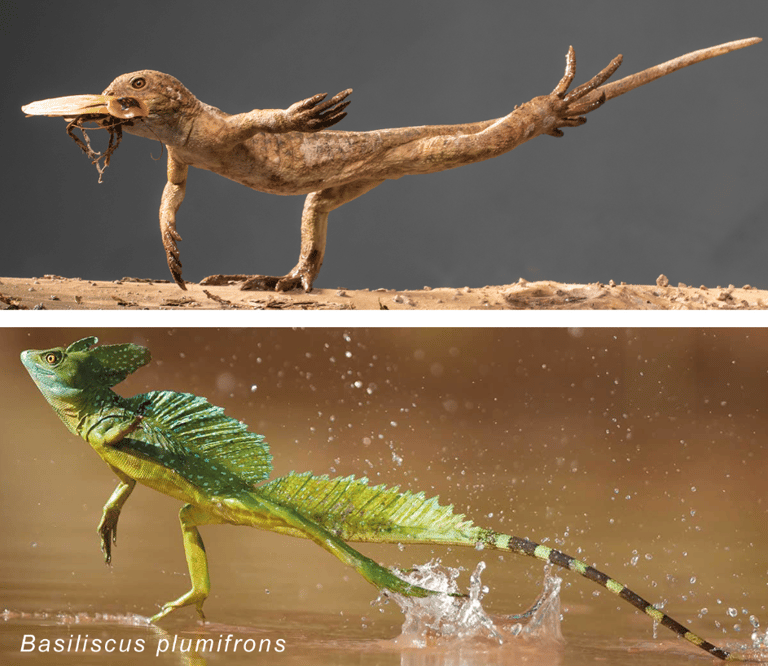
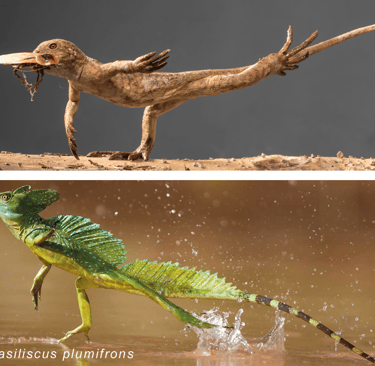
Insights into Permian Terrestrial Locomotion: Eudibamus cursoris (David S. Berman et al.; 2000) – The First Documented Bipedal Runner in the Evolution of Life
Sebastian Brandt
Zusammenfassung
Eudibamus is an extinct genus of the family Bolosauridae that lived during the Permian, approximately 280 million years ago. These enigmatic vertebrates are assigned to the so-called parareptiles ("reptile-like"), as they exhibit reptiliomorph features in their anatomy despite their great age—even though they are significantly older than any true reptiles as we know them today. Parareptiles represent a distinct group: an evolutionary experiment that took place long before the divergence of vertebrates into amphibians, reptiles, and mammals. The only known skeleton of Eudibamus cursoris was discovered at the world-famous Bromacker quarry in Thuringia (Central Germany), one of the most significant sites for early terrestrial vertebrates worldwide.
The Bromacker finds document a complex ecosystem of the Permian, featuring a diverse fauna and flora of early land dwellers such as Orobates, Diadectes, Dimetrodon, and many other species. The local sandstones and claystones were deposited on a high-altitude continental plateau, crisscrossed by periodic watercourses, ponds, and floodplains.
This Permian landscape, far removed from the sea, was characterized by an extreme continental climate with scorching days and cool nights. It was the era of the single supercontinent Pangaea, before it began to break apart and split into today’s continents. Evidence even confirms periodic temperatures below freezing, forcing the flora and fauna to adapt to significant climatic extremes in order to survive. The herpetofaunal vertebrates of this time and region are referred to as 'Ursaurier'—not because they are close ancestors or relatives of the dinosaurs that appeared millions of years later, but because they represent the first clearly documented, fully terrestrial vertebrates in the evolution of life.
brochure for download
A Comparison of Terrestrial Locomotion: Basiliscus plumifrons & Eudibamus cursoris
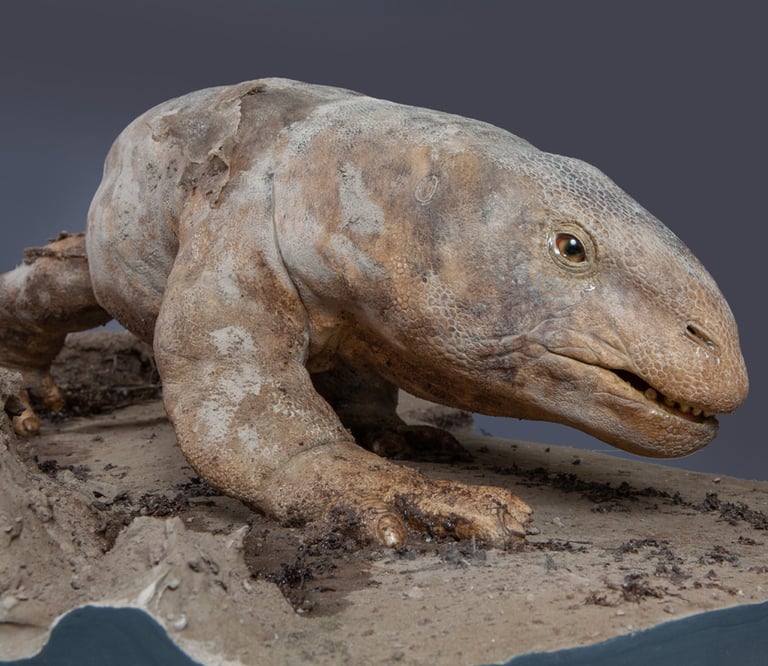
Diadectes absitus (David S. Berman et al.; 1998) & Ichniotherium cottae – Insights into Permian Terrestrial Locomotion
Sebastian Brandt
Summary
Diadectes absitus is an extinct species from the family Diadectidae—an evolutionary group of vertebrates that, during the Permian, combined conservative amphibian features with advanced, reptile-like characteristics. Diadectes absitus has been known since 1998 through exceptionally well-preserved fossils: a nearly complete articulated skeleton, isolated limbs, and skulls, as well as rare fossil footprints and trackways described under the name Ichniotherium cottae. These remains originate from the world-famous Bromacker sandstone quarry in Thuringia, Central Germany.
The combination of fossil trackways and fully articulated skeletal remains is unique worldwide. Further fossils from the same stratigraphic layer provide evidence of underground burrows, which can also be attributed to the related genus Orobates pabsti and likely served as fossil traps that preserved complete skeletons. The Bromacker finds document a complex Permian ecosystem with a diverse fauna and flora of early terrestrial life forms. The local sandstones and claystones were deposited on a high-altitude continental plateau, crisscrossed by periodic watercourses, ponds, and floodplains.
This Permian landscape, far removed from the sea, was characterized by an extreme continental climate with scorching days and cool nights. It was the era of the single supercontinent Pangaea, before it began to break apart and split into today’s continents. Evidence also confirms periodic temperatures below freezing, forcing the flora and fauna to adapt to significant climatic extremes in order to survive. The herpetofaunal vertebrates of this period are referred to as 'Ursaurier'—not because they are close ancestors or relatives of the dinosaurs that appeared millions of years later, but because they represent the first clearly documented, fully terrestrial vertebrates in the evolution of life.
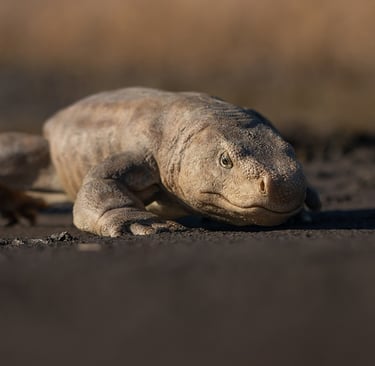
Diadectes absitus – scientific reconstruction
brochure for download
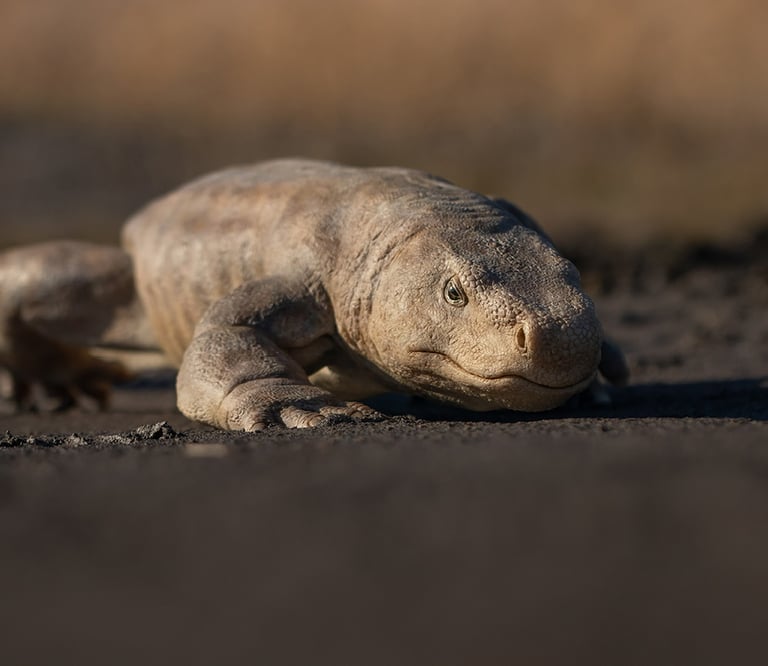
Orobates pabsti (Berman et al., 2004) & Ichniotherium sphaerodactylum – A Further Insight into Permian Terrestrial Locomotion
Sebastian Brandt
Summary
Orobates is an extinct genus from the family Diadectidae—an evolutionary group of vertebrates that, during the Permian, combined conservative amphibian features with advanced, reptile-like characteristics. Orobates pabsti has been known since 1998 through exceptionally well-preserved fossils: a fully articulated skeleton as well as numerous fossil footprints and trackways described under the name Ichniotherium sphaerodactylum. These remains originate from the world-famous Bromacker sandstone quarry in Thuringia, Germany
The combination of fossil trackways and fully articulated skeletal remains is unique worldwide. Further fossils from the same stratigraphic layer provide evidence of underground burrows, which can also be attributed to Orobates and likely served as fossil traps that preserved complete skeletons. The Bromacker finds document a complex Permian ecosystem with a diverse fauna and flora of early terrestrial life forms. The local sandstones and claystones were deposited on a high-altitude continental plateau, crisscrossed by periodic watercourses, ponds, and floodplains.
This Permian landscape, far removed from the sea, was characterized by an extreme continental climate with scorching days and cool nights. It was the era of the single supercontinent Pangaea, before it began to break apart and split into today’s continents. Evidence also confirms periodic temperatures below freezing, forcing the flora and fauna to adapt to significant climatic extremes in order to survive. The herpetofaunal vertebrates of this period are referred to as 'Ursaurier'—not because they are close ancestors or relatives of the dinosaurs that appeared millions of years later, but because they represent the first clearly documented, fully terrestrial vertebrates in the evolution of life.
Orobates pabsti – scientific reconstruction
brochure for download here
Ceratites
Publications on ceratites by Siegfried Rein, Manfred Schulz & Sebastian Brandt
Summary
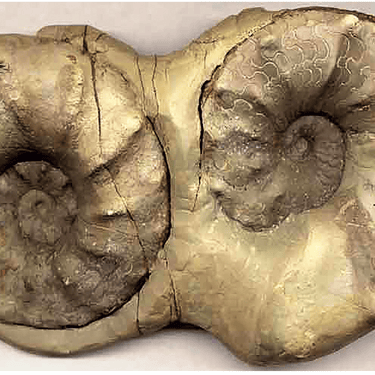
Following the allopatric speciation of an unknown species of the genus Ceratites (de Haan) from the Sephardic/Levantine faunal province, the sister species Ceratites nodosus (Schlotheim, 1820) and Ceratites tornquisti (Philippi, 1901) emerged. The phylogenetic development of Ceratites nodosus as an evolutionary species began in the Lower Illyrian with its immigration into the Hessian/Thuringian depression of the Muschelkalk sea. The analysis of the fossil material from the Geilsdorf flexuosus population, located 4.5 meters above the Tetractinella bed, provides the baseline data for its continuous endemic phylogenesis.
The scientific significance of these specimens is rooted in their autochthonous burial as individuals of a population within a stratigraphically undisturbed layer. A diagenetic peculiarity is the complete sediment filling of the living chamber, which allows for a unique biometric division into three ontogenetic stages up to the shell aperture.
The general understanding of the biology of the Geilsdorf flexuosus population is based on its two-stage individual development. The growth reversal—shifting from progressive to regressive increase in cross-section during shell construction—corresponds to the transition from the juvenile to the adult stage. The term 'regressive growth metamorphosis' (rWM) was coined to describe this evidence of morphological change within the ontogenetic development of the Ceratite organism. Regressive growth metamorphosis is the most significant evolutionary trait of these immigrants and is hypothetically interpreted as the onset of sexual maturity.
As a diverging development, a genetically based antagonism of the inner spiral becomes visible during rWM. An umbilical width parameter value of '20' separates two juvenile morphotypes: morphotype 'e' (< 20) and morphotype 'p' (> 20). Due to physiological changes during adult growth, these parameter values shift across ontogenetic stages. Nevertheless, in all individuals of morphotype 'e', the values remain consistently < 20. In contrast, morphotype 'p' can transform into individuals with umbilical values < 20. This causally and genetically evidenced distinction between morphotypes 'e' and 'p' is hypothetically interpreted as a feature of sexual dimorphism.
The phragmocone, representing the juvenile form of the Geilsdorf Ceratite shell, is consistently dichotomously sculptured. With an average of 13 built-in chambers, it represents the smallest phragmocone construction within the morphocline. Equally unusual is the development of the living chamber sculpture in flexuosus morphs; it does not follow its own progressive evolutionary structure but rather a regressive reduction of adult sculptural formations. Understanding the origin of these specific sculptural and shell formations requires acknowledging the surface-wide attachment of the soft body to the hypostracum, extending from the apical end of the living chamber to the head-foot just before the shell aperture.
The Chronospecies Ceratites flexuosus from Geilsdorf – An Evolutionary Model Case of the Evolutionary Species Ceratites nodosus
Siegfried Rein & Sebastian Brandt
publication for download
Summary
With 11,000 specimens, the Muschelkalk Cephalopod Collection of the Erfurt Natural History Museum holds an extensive inventory of large population assemblages. Following the paradigm shift from inanimate individual objects to biological objects of population genetics, they form the basis for the fourth stage of Ceratite research using the biospecies Ceratites nodosus. The seamlessly documented evidence of the evolutionary development of the biospecies Ceratites nodosus—from its immigration into the Muschelkalk sea to its extinction—is due to two factors:
– Exceptionally favorable geological and geochemical conditions allow for excellent fossil preservation and preparation of the Ceratite internal molds (steinkerns).
– An unprecedented evolutionary adaptation to unpredictably changing ecological conditions guaranteed the unusual biostratigraphic survival time of the biospecies.
Despite varying ecological conditions, the evolution of the biospecies remained consistently dimorphic over five million years. The period between the Gänheim Bed and the Schellroda Bed marks the most extreme phase of Ceratite phylogenesis. During the transgressive advance of the northwestern Palaeotethys in the gredleri zone, a flooding of the Muschelkalk sea likely caused a change in water chemistry that proved fatal for Ceratites nodosus. While the simultaneously immigrating Parapinacoceras thiemeli and Gymnites brunzeli briefly found optimal living conditions, only a few Thuringian refugia prevented the total extinction of the biospecies Ceratites nodosus.
This unparalleled evolutionary adaptation becomes visible at the absolute low point of the biospecies' phylogenesis. In the first progenesis phase, morphology and physiology degenerate to the early ontogenetic stage of the original immigrants. The shell aperture ends regressively, and the living chamber index values correspond to the minimum values found in Geilsdorf (Brandt & Rein 2019). As part of the organ system, the phragmocone became a life-saving organ for the Ceratites. Through the construction of additional septa, the extinction process was averted. The biology and lifestyle of the biospecies Ceratites nodosus are equally unprecedented. The formation of large-scale underpinnings of the original shell provides proof that the Ceratite soft body must have been fully attached to the hypostracum. Consequently, Ceratites nodosus was unable to retract its head-foot into the protective shell when faced with danger.
– The evidence of full-body attachment of the soft body to the hypostracum is the most significant discovery in Ceratite soft-body research.
– The regenerative capacity of the soft body following injury or disease can only be realistically reconstructed and understood through internal mold preservation without the original shell.
Ceratites nodosus led a vagile-benthic lifestyle. This lifestyle necessitated a trophic relationship adapted to life on the seafloor. Ceratites nodosus lived in massive populations at a lower trophic level of the ecosystem's food chain. The age composition of the population implies a social lifestyle in generational communities—a unique trait among invertebrates (Rein 2003).
The Muschelkalk Cephalopod Collection of the Erfurt Natural History Museum and its Significance in Muschelkalk Research
Siegfried Rein & Sebastian Brandt
publication for download
Summary
The analysis of data from aberrant spinose morphs yields a wealth of new insights while confirming all previous diagnoses in this regard. The variable regenerative behavior of the mantle epithelium allows for conclusions regarding the biological organization of the soft body and the tolerance range of physiological processes. This includes evidence of complete mantle attachment to the hypostracum within the living chamber, as well as the functional coordination between the preseptal and apical mantle epithelium and the siphuncular apparatus.
The evaluation of these anomalous formations impressively reveals that the Ceratite soft body shares no morphological or biological commonalities with Nautilus. Both the heterogeneous rhythm of septal construction and the existence of organic lamellae prove that even the phragmocone lacks functional-morphological similarities to Nautilus. Apparently, intracameral organic structures in fluid-filled chambers briefly perform a physiological role in supporting the healing process. Consequently, the phragmocone functions as a metabolic-support organ for organisms with a vagile-benthic lifestyle.
On the Biology of Ceratites from the spinosus Zone – Results of a Population Analysis, Part III: Conclusions on the Biological Organization and Lifestyle of the Ceratite Organism
Siegfried Rein & Sebastian Brandt
Publication for download
“The most erroneous stories are those we think we know best—and therefore never scrutinize or question.” (GOULD 1998)
Summary
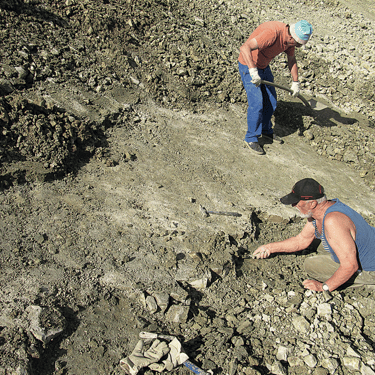
Over the past 15 years, numerous decapods—primarily Lissocardia silesiaca (v. Meyer, 1847)—have been recovered from the Upper Muschelkalk of the Großenlüder Graben (East Hesse). They originate from the Lissocardia bed, a laterally persistent layer approximately 25 cm below the Tetractinella marker bed (Brockelkalk 4a, Trochitenkalk Formation, Kraichgau Subformation, Anisian, Upper Illyrian). Following the revision of the decapods by Garassino et al. (1999/2000), the Upper Muschelkalk and its fossiliferous layer were exposed in the Otterbein quarry. Intensive large-scale surveys, with special focus on sedimentological aspects and favored by excellent exposure conditions, now allow for concrete conclusions regarding the formation and diagenetic characteristics of the deposit. New finds of Lissocardia—specifically exuviae within burrows—are described, and their implications for the species' lifestyle and habitat are discussed.
The anatomy of the species Lissocardia silesiaca is supplemented with further details and examined from a functional-morphological perspective. Particular emphasis is placed on the scientific significance of these new finds for understanding this unique habitat within the Upper Muschelkalk.
"Lissocardia silesiaca – A Specialist in its Ecosystem"
The Lissocardia Bed of Großenlüder (Hesse/Germany)
Manfred Schulz & Sebastian Brandt
publication for download
Summary
Two new natant decapods are described from the Upper Muschelkalk (Middle Triassic, Ladinian) of the Germanic Basin. The discovery of a member of the Penaeidae Rafinesque, 1815 from the Trochitenkalk Formation of Großenlüder (Hesse) is assigned to the genus Antrimpos Münster, 1839. This stenopotent immigrant is designated as the new species Antrimpos germanicus n. sp. Another find from the Meissner Formation of Bucha (Thuringia) proves to be the oldest representative of the Caridea Dana, 1852 known to date. By its classification within the superfamily Palaemonidae Rafinesque, 1815, it closes a fossil record gap of approximately 110 million years in the evolution of carideans. The new genus Parapalaemonetes n. gen. and its eurypotent type species Parapalaemonetes thuringiacus n. gen. n. sp. are diagnosed. Both new species belong to divergent formations and thus represent fundamentally different living conditions within the Upper Muschelkalk ecosystem.
The reasons for the generally poor fossil record of natant decapods in the Upper Muschelkalk are analyzed with regard to facial conditions and paleoecological aspects. The phylogenetic significance of these new finds is interpreted, and new considerations regarding the variation and chronostratigraphic speciation of the genus Antrimpos, as well as the evolution of caridean decapods, are discussed.
Two new natant decapods from the Upper Muschelkalk (Middle Triassic, Ladinian) of the Germanic Basin – Antrimpos germanicus n. sp. and Parapalaemonetes thuringiacus n. gen. n. sp.
Sebastian Brandt & Manfred Schulz
publication for download
Summary
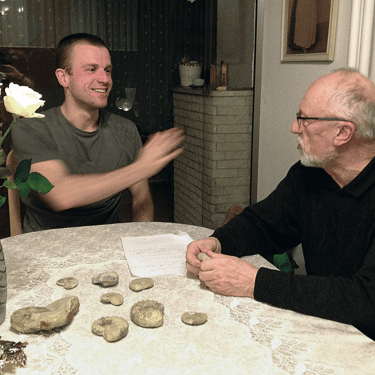
With a mischievous smile and his characteristic fiery gaze, 'Siggi' used this single sentence to outline what his work meant to him and how he lived it. Siegfried Rein was capable of more than just researching and knowing the biological relationships of Ceratites nodosus—a strange species that vanished 234 million years ago. He could—he had to—immerse himself in this unknown organism and its lost world to understand it authentically. From this imagined, often brooding 'interior view,' he was able to interpret abstract data sets and diagrams from countless statistical measurements of tens of thousands of fossil internal molds in his own brilliant way, reconstructing piece by piece a more vivid picture of these fascinating creatures and their world.
Sometimes, the decisive flashes of inspiration came in the middle of the night—he slept with a voice recorder on his nightstand—and then sleep was out of the question anyway. This captivating, highly thrilling work was, alongside his beloved wife Monika, 'Siggi's' purpose in life, following his motto: '… the real reward must lie in the satisfaction, in the privilege of working on an exciting topic, in the inner peace after work well done, in the rare pleasure of knowing that one has made a difference.' (S. J. Gould)
„I will be a Ceratit!“
In memory of Siegfried Rein (1. August 1936 - 2. Dezember 2020)
Sebastian Brandt
publication for download