
TRIASSIC Retrospective: Unique Insights into the flexuosus Zone of Geilsdorf
In the summer of 2016, Sebastian Brandt discovered an extraordinary fossil site in Geilsdorf (Thuringia) within the Ceratites flexuosus zone of the Upper Muschelkalk. Following intensive excavations, over 150 exceptionally well-preserved ceratites were recovered—a find that is not only among the most significant of its kind in Germany but also offers new insights into the evolution and migration of early ceratites.
Sebastian Brandt
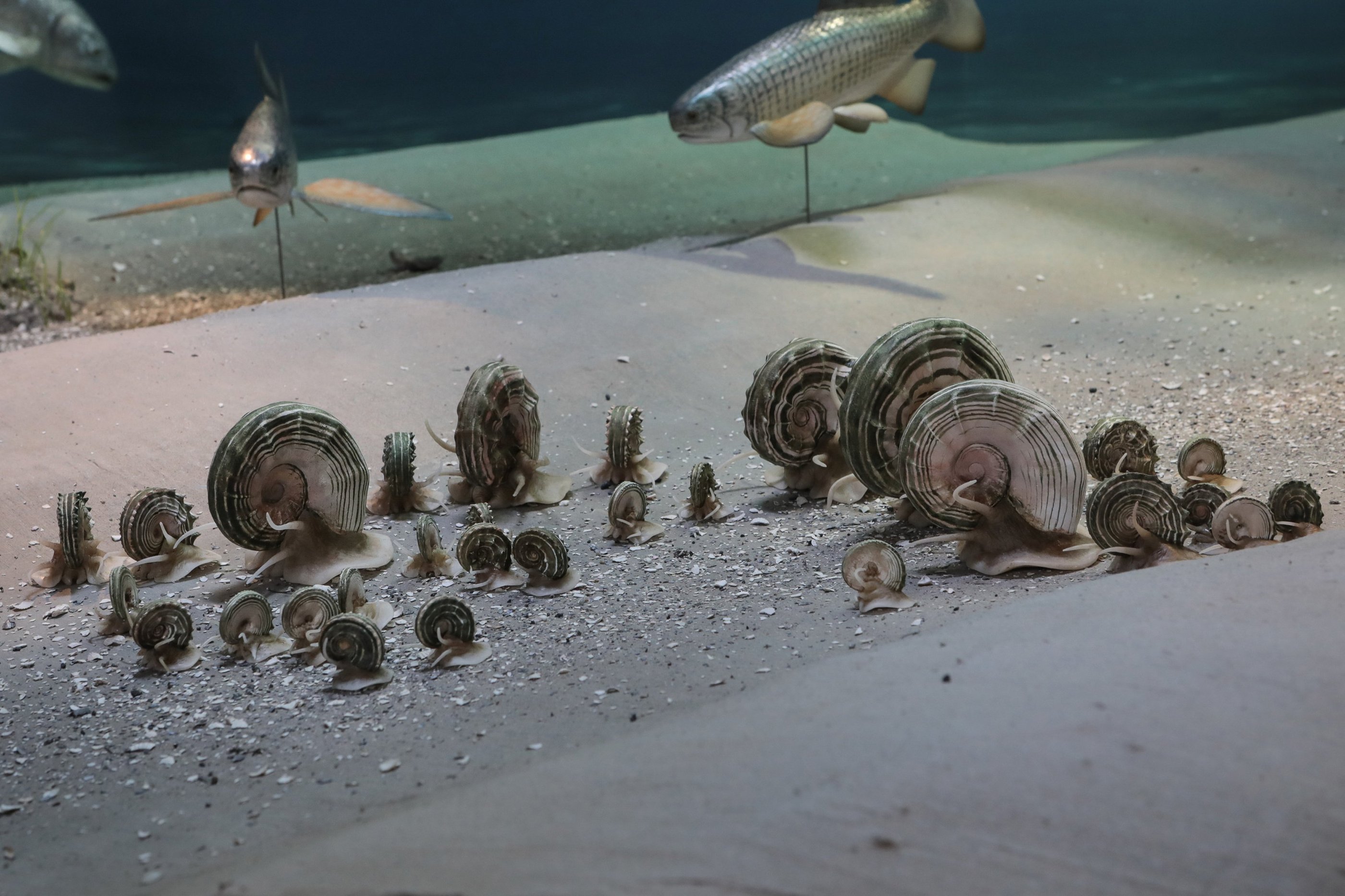
On the occasion of two new publications, I would like to take this opportunity to introduce a former fossil site that represents a personal highlight of my collecting activities in the Upper Muschelkalk of Thuringia.
In early June 2016, my fellow collector Kay-Uwe Elste informed me that a new feeder road for the A 71 motorway was under construction near Stadtilm, exposing the Upper Muschelkalk in several places. During our very first joint visit to the remote construction site, it became clear that material from the flexuosus zone was being moved to the spoil heaps.
Ceratites flexuosus—the oldest and first chronospecies of the evolutionary lineage of Ceratites nodosus—is something of a 'Holy Grail' for 'obsessed' Ceratite collectors like myself. Beyond its immense, almost ghostly rarity and fascinating aesthetics, it was primarily the scientific significance of these extremely variable immigrant morphs that had driven me to scrutinize even the smallest outcrops of this zone for decades. Consequently, the handful of spontaneously discovered fragments on the spoil heap set off all my alarm bells, as previously, even a single Ceratite find from this zone had always been a minor sensation.
Despite the massive earthworks and intensive searching, the outcrop initially presented itself in the usual Ceratite-free manner, with the added complication of tectonically disturbed deposits. I began to suspect that all the specimens must originate from a single fossiliferous layer; otherwise, we should have found more material. However, no specific horizons were known from the previous localities of Troistedt and Bucha. Until then, finds had almost exclusively been rare, isolated occurrences within the entire nine-meter-thick regional stratigraphic complex of this zone.
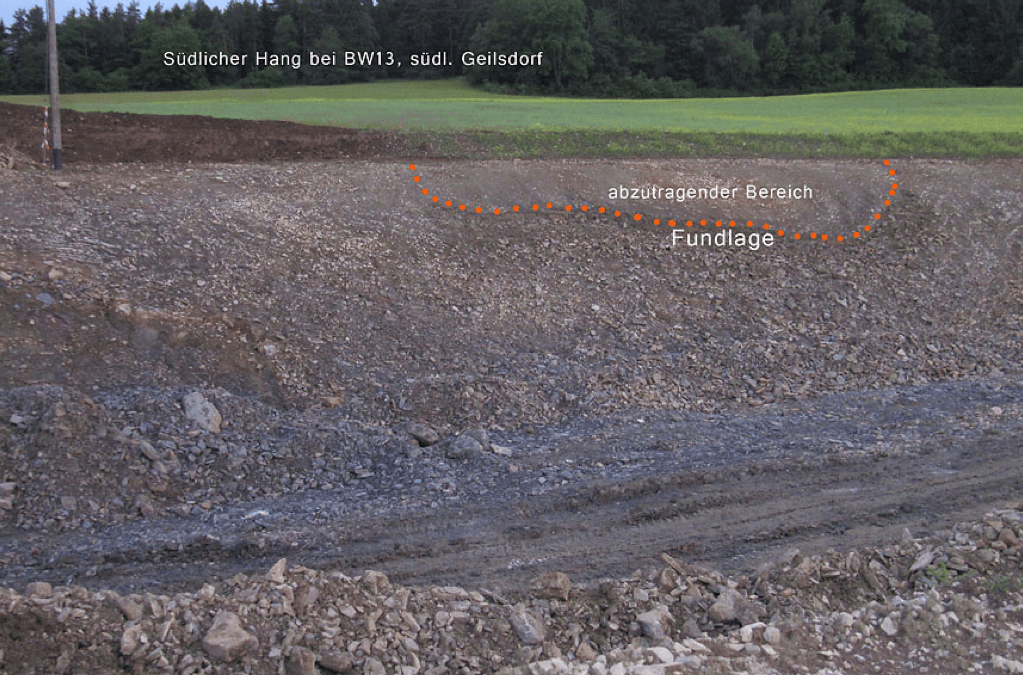
I couldn’t let it go, and we spent many days searching the slopes—until June 24th, as dusk was already falling, it finally happened: a Ceratites flexuosus peeked out of the slope in situ, 4.5 m above the Tetractinella bed. I started digging, and within about 30 minutes, I had recovered no less than 16 almost perfectly preserved internal molds. Euphoric, I called my friend Siegfried Rein to report the sensation, as a Ceratite population had never been recovered from this horizon before. He set off immediately, and we continued digging well into the night by the light of our torches.
In the following days, everything had to move quickly: securing the site, absolute secrecy, informing the Erfurt Natural History Museum, and contacting DEGES as well as the executing construction company, Bickhardt Bau. Everything went smoothly, thanks in particular to Kay-Uwe’s excellent contacts. Subsequently, we organized a total of three major, adventurous excavations (at times in over 30-degree heat) involving heavy machinery and personnel from Bickhardt Bau, who even went so far as to re-excavate the already finished embankment slope specifically for us.
Fig. 1: The Geilsdorf locality prior to excavations.
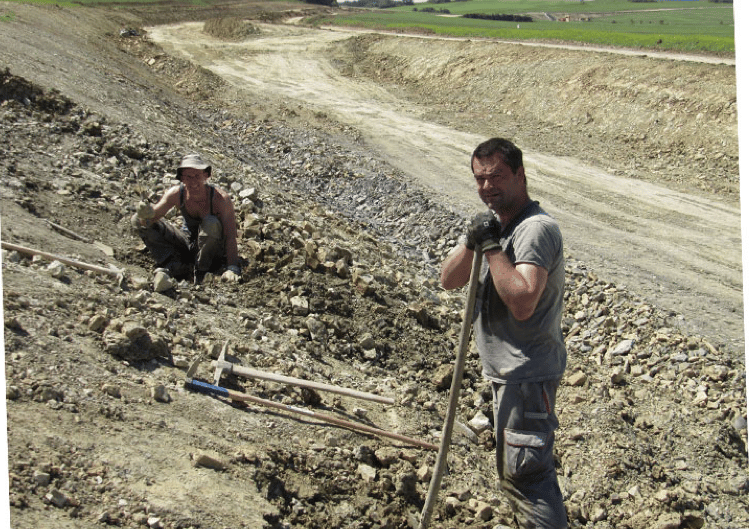
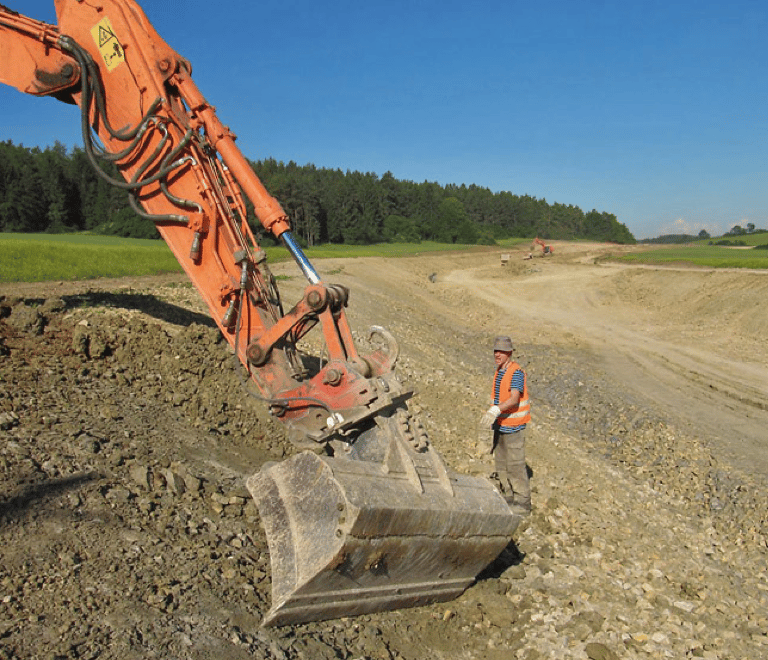
The Geilsdorf locality prior to excavations.
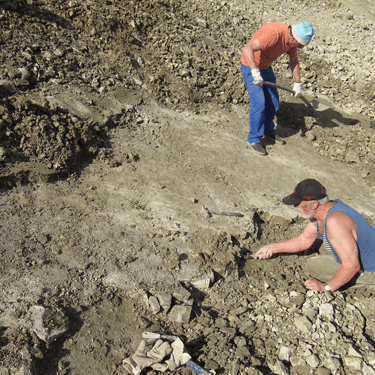
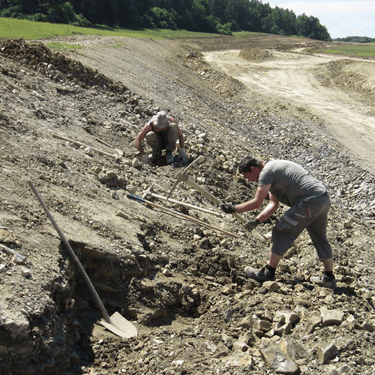
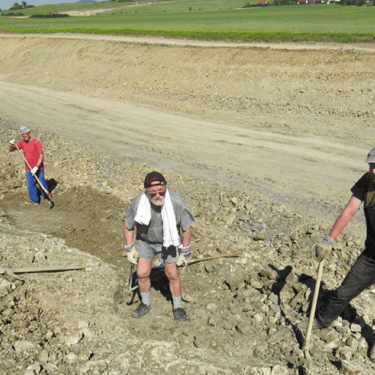
The diligent excavation team remained in high spirits, despite the extreme heat and intense sunlight.
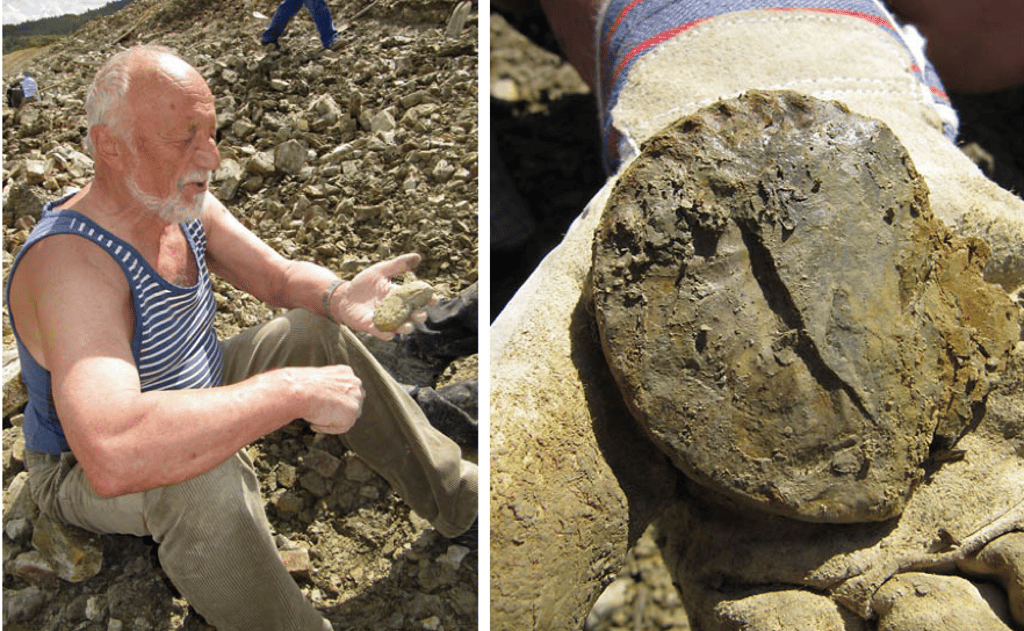
On the fossil layer, the work continues with fine tools – and the effort is rewarded with the hoped-for finds.
The ceratites originated from a clay-marl layer about three centimeters thick, which was covered by a continuous mudstone layer approximately eight centimeters thick. Overlying this was a very distinct plastic clay layer, allowing the fossil horizon to be localized over large distances despite the tectonic disturbances. The excavator was used to clear the area down to the top of the mudstone layer. In meticulous teamwork (Kay-Uwe Elste, Siegfried Rein, Thomas Billert, Peter Thieme, several helpful colleagues from the Erfurt Natural History Museum, and myself), this limestone bed was then pried out down to the fossil layer. The ceratites were scattered widely, either individually or in pairs, within the otherwise almost fossil-free clay layer—about one or two specimens per square meter. In total, approximately 120 square meters of the fossil horizon were searched, and over 150 often perfectly three-dimensionally preserved ceratite internal molds were recovered.
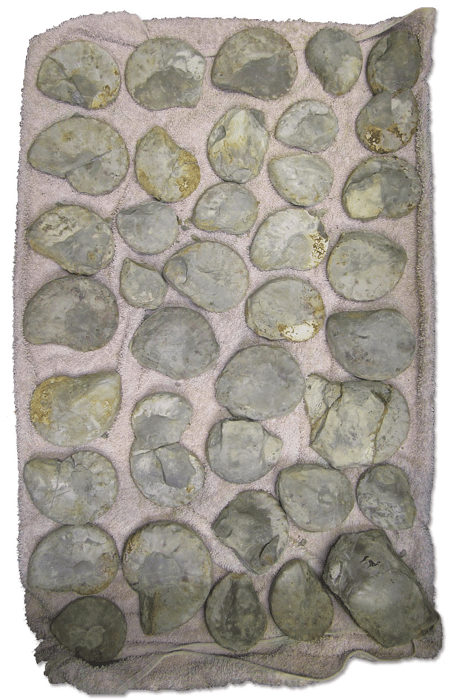
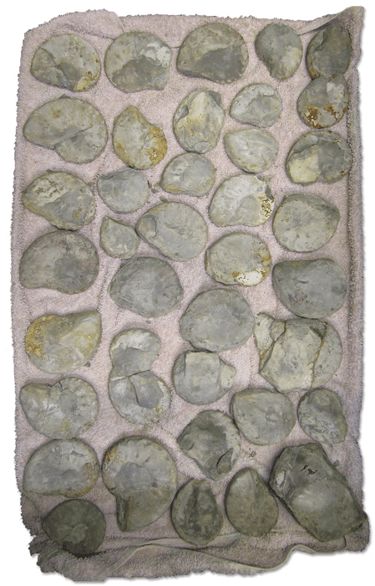
Flexuose ceratites after cleaning.
Due to its age and quality of preservation, the Geilsdorf flexuosus population is absolutely unique and outstanding. It represents a key to understanding early Ceratite evolution in the Upper Muschelkalk. Following extensive preparation and statistical analysis, the research results have now been published. These shed an entirely new light on the immigration of Ceratites from the Sephardic faunal province, as well as on the biological adaptation strategies of these mysterious Ceratite organisms within the endemic ecosystem of the Upper Muschelkalk sea.
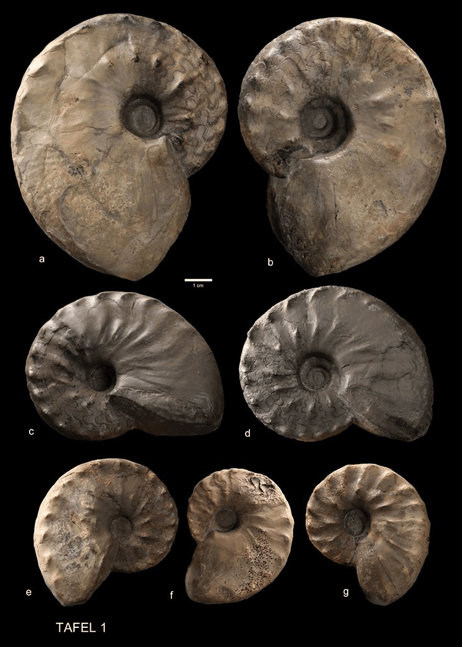
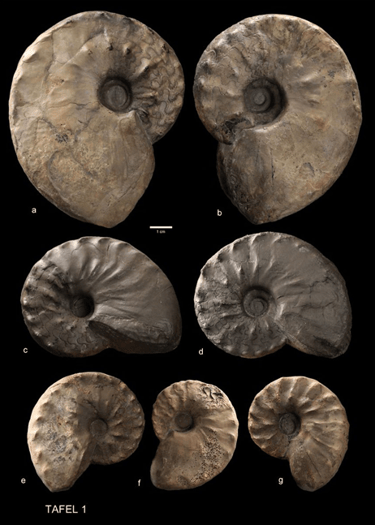
Plate example from BRANDT, S. & REIN, S. (2019): Examples of size classes of adult individuals in the Geilsdorf flexuosus population. Visit the publication for the full study.
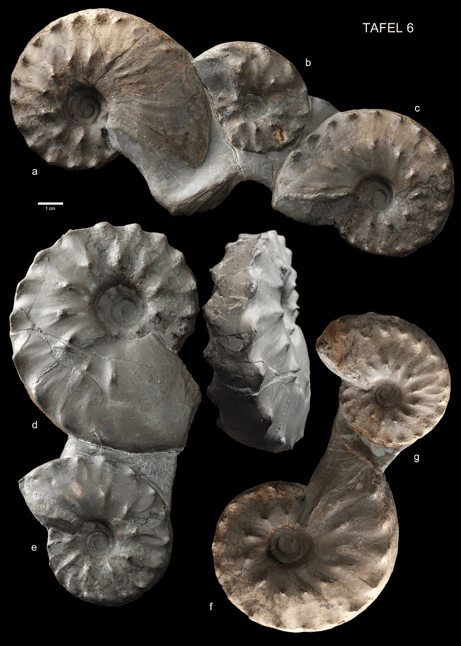
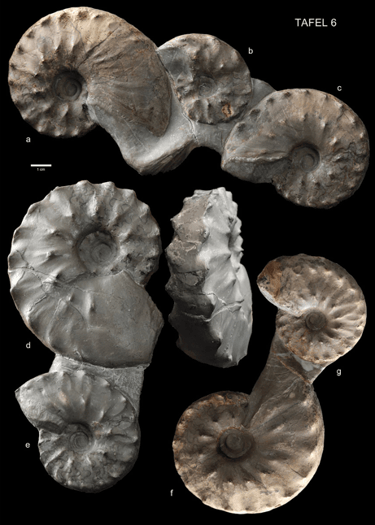
Further plate example from the same publication: spectacular findings